Real Scaffold Boards vs Scaffold-Style Timber – What’s the Difference?
Not all scaffold boards are the same. Some are genuine British Standard scaffold boards built for hard use, while others are simply scaffold-style timber made to look similar. Here’s what buyers should know before ordering.

Learn the difference between real British Standard scaffold boards and scaffold-style timber, including grades, dimensions, durability, and what buyers in Nottingham should look for.
If you are searching for reclaimed scaffold boards in Nottingham or looking for timber for shelving, benches, tables, rustic furniture, or garden projects, it is worth knowing that not all scaffold boards are the same.
Some boards are proper genuine scaffold boards originally made for scaffold use. Others are simply scaffold-style timber that may look similar but was not manufactured to the same recognised standard.
That matters because buyers often assume all “scaffold boards” are equal. In reality, there can be a big difference in strength, durability, dimensions, consistency, and authenticity. The recognised UK standard for timber scaffold boards is BS 2482:2009, which sets requirements for board size, grading, marking, and performance.
What Are Real Scaffold Boards?
Real scaffold boards are boards originally produced for scaffold platforms and hard site use. In the UK, the recognised benchmark is BS 2482:2009. Boards made to that standard are not just random planks cut to a similar size. They are manufactured to known dimensions and are marked so buyers can identify the grading type and intended support span.
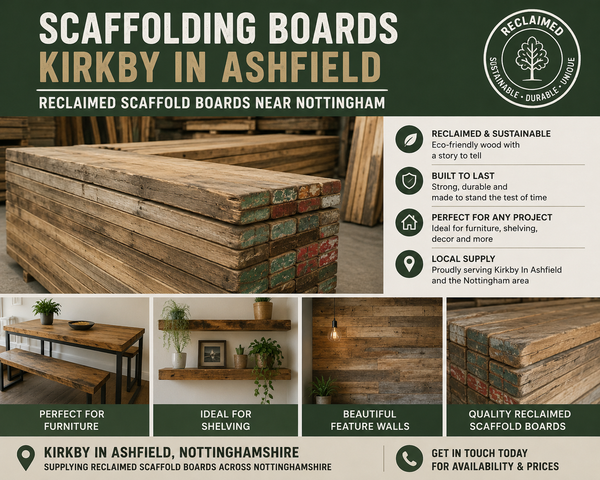
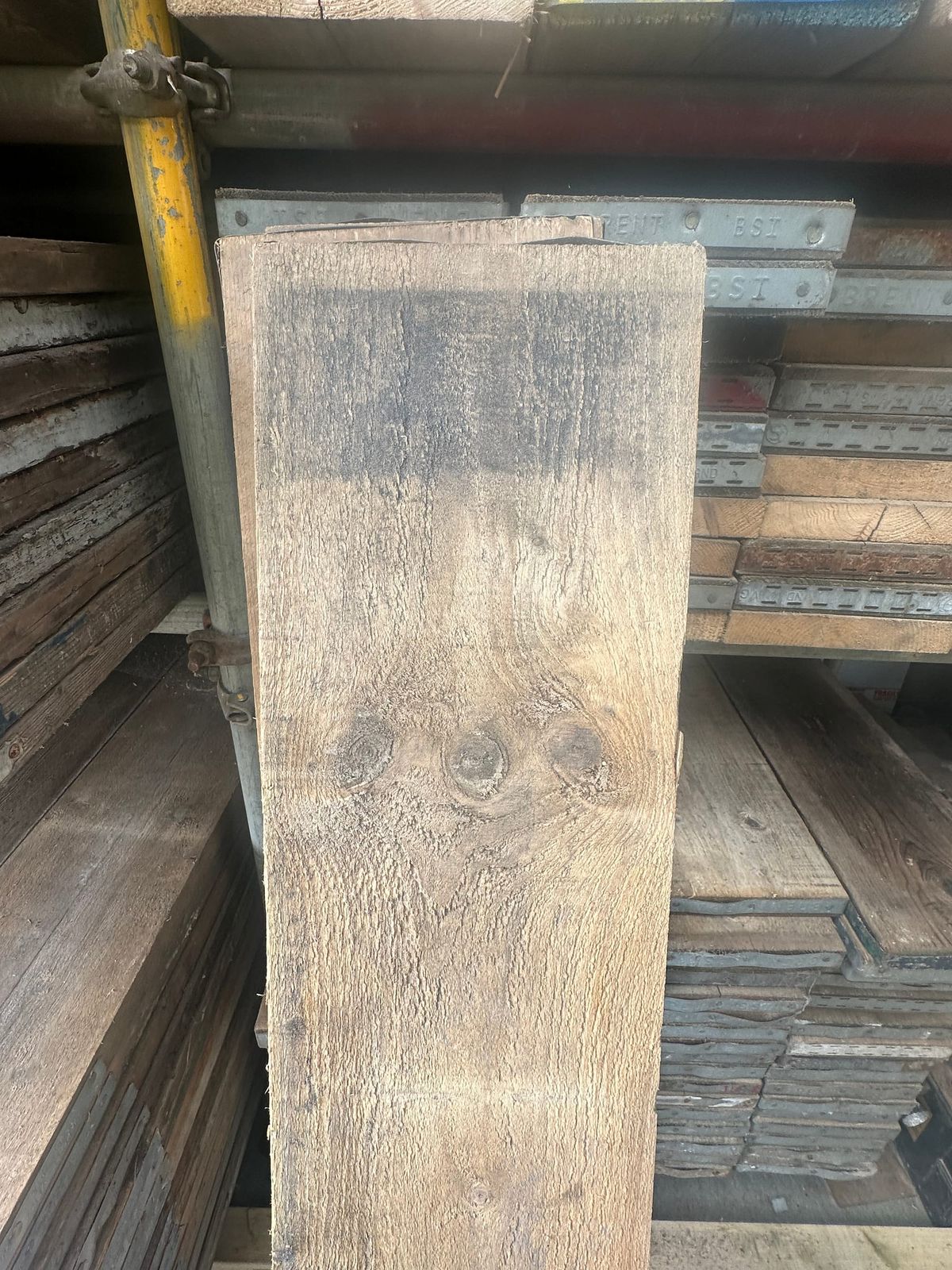
That is one reason proper reclaimed scaffold boards are so popular for upcycling and furniture projects. People like them because they are known for their solid feel, chunky dimensions, hard-wearing nature, and genuine industrial character. Their marks, grain, knocks, and weathered texture are part of what makes each board unique.
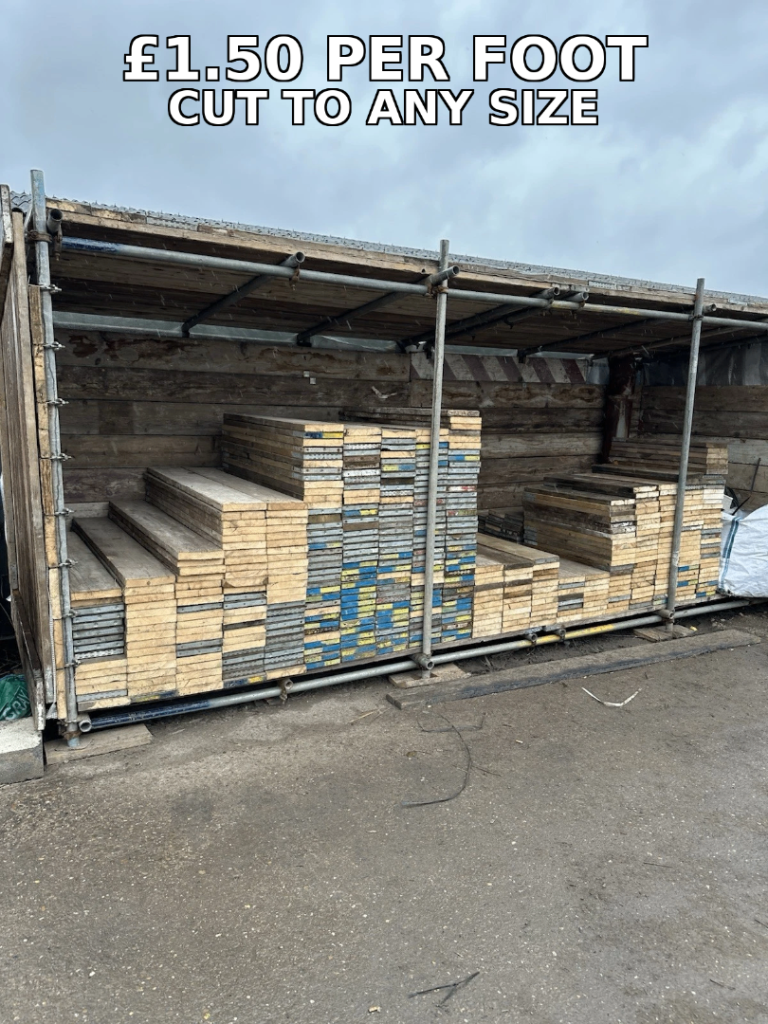
Looking for reclaimed proper scaffolding boards Nottinghamshire, check us out below.

What Is Scaffold-Style Timber?
Scaffold-style timber is timber cut or sold to give a similar appearance to scaffold boards, but it was not necessarily manufactured as a BS scaffold board.
It may still be useful for some decorative or light DIY purposes, but it is not the same thing as a proper British Standard scaffold board. It may lack the same formal marking, target support-span information, or the same recognised manufacturing and grading background. Official BS boards are identified by end-band markings such as BS 2482:2009, supplier ID, M or V grading, and a stated support span.
So although scaffold-style timber can sometimes look similar at first glance, many buyers prefer the real thing when they want proper reclaimed character and more confidence in what the board originally was.
Are There Really Grades Like A, B and C?
This is where many buyers get confused.
In general UK scaffolding guidance, the key recognised standard is BS 2482:2009. HSENI specifically says that many boards commonly referred to as Grade A have not been graded to BS 2482:2009 and recommends using boards manufactured to that British Standard.
So if someone says a board is “Grade A,” that does not automatically mean it is a British Standard scaffold board.
Also, in the reclaimed timber market, terms like Grade A, Grade B or Grade C are often used more as a condition guide than as an official structural class. For example, reclaimed sellers sometimes use “Grade B” simply to describe a more weathered or cosmetically rougher board. That is a market description, not the same as the official BS identification system.
For that reason, the strongest wording is not usually “best grade.” The stronger wording is:
British Standard scaffold boards
BS 2482:2009 boards
genuine reclaimed scaffold boards with British Standard dimensions
How to Identify a Proper British Standard Scaffold Board
Boards manufactured to BS 2482:2009 can be identified by markings on the end band. According to HSENI, BS boards should show:
- the number and year of the British Standard
- the supplier identification mark
- the letter M or V for machine or visual grading
- the word “support” followed by the target span in metres
- in some cases, a third-party certification mark too
That is very useful information for buyers, because it gives more confidence that the board is a proper scaffold board rather than just timber sold under a similar name.
(We supply them! Check us out below)
Unbranded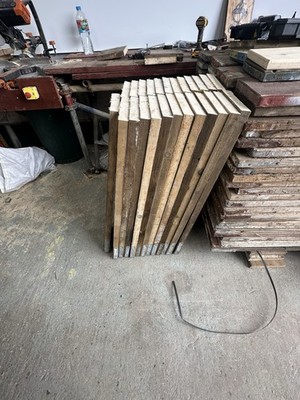
What Dimensions Are Real Scaffold Boards?
One of the biggest signs of a genuine scaffold board is the size.
BS 2482:2009 covers timber scaffold boards with a standard 225mm width and thicknesses of 38mm or 63mm. The most common board used in everyday UK trade and DIY resale is the 38mm x 225mm board.
Common lengths sold in the UK include:
- 1.5m / 5ft
- 1.8m / 6ft
- 2.4m / 8ft
- 3.0m / 10ft
- 3.9m / 13ft
So if you are buying an 8ft board, the size people usually expect is roughly:
2.4m long x 225mm wide x 38mm thick
That chunky size is one of the reasons they work so well for furniture, shelving, bench tops, feature pieces, and rustic interiors.
Why Proper Boards Feel Stronger and More Durable
Proper scaffold boards became popular for upcycling for a reason: they were originally made for hard use, not just appearance.
BS boards are graded and marked for known support spans, commonly 1.2m or 1.5m, depending on the board and grade. That means they were produced with recognised performance criteria in mind, rather than just being ordinary timber that happens to be cut to a similar shape.
For customers, that usually translates into boards that feel:
- more substantial
- more solid under hand
- thicker and chunkier than many alternatives
- better suited to heavy rustic-style projects
- more authentic in both look and feel
Why End Bands Matter Too
Real scaffold boards often have metal end bands, and they are not there just for appearance.
HSENI notes that the end bands protect the vulnerable end grain of the board and that damaged bands can leave sharp edges or reduce protection. The end band is also where important identification markings are commonly found.
For reclaimed buyers, that matters because the end band can sometimes help show whether a board was originally manufactured as a proper British Standard scaffold board.
Real Boards Have Real Character
Aside from strength and dimensions, one of the main reasons people buy reclaimed scaffold boards is the look.
Proper reclaimed boards often show:
- genuine grain variation
- age marks
- knocks and wear
- old paint traces or job-site character
- a proper rustic industrial feel
That authentic finish is hard to fake. Scaffold-style timber may look cleaner or more uniform, but many buyers actually prefer the character of a genuine reclaimed board because it gives shelves, furniture, and home projects a more natural and individual result.
What This Means for Buyers in Nottingham
If you are buying locally, the best thing is to look past the words “scaffold board” on their own and ask what the boards actually are.
Are they:
- genuine reclaimed scaffold boards?
- proper British Standard dimensions?
- originally made for scaffold use?
- marked or identifiable as BS boards?
- chunky 225mm x 38mm boards rather than thinner lookalikes?
That is the difference between buying timber that merely looks the part and buying boards with the proper feel, weight, and character people are usually after.
At AA Trading Merchants, that is exactly the point we want to make. We are not talking about lightweight imitation scaffold-style timber. We are talking about proper reclaimed scaffold boards, built for hard use, built to last, and now ideal for furniture, shelving, upcycling, and rustic projects around the home and garden.
Final Thoughts
The phrase “scaffold board” can cover very different products.
Some are genuine scaffold boards made to recognised standards. Others are simply scaffold-style timber sold because they resemble the real thing. If you want authentic reclaimed character, proper dimensions, a solid feel, and more confidence in what you are buying, real scaffold boards are usually the better choice.
And when people ask about Grade A, B or C, the real answer is this: the most meaningful benchmark is not the letter on a sales advert, but whether the board is a proper BS 2482:2009 British Standard scaffold board with the dimensions, markings, and background that come with it.
Looking for Proper Reclaimed Scaffold Boards in Nottingham?
At AA Trading Merchants, we supply proper reclaimed scaffold boards for all kinds of projects, including:
- shelves
- benches
- tables
- rustic furniture
- workshop tops
- garden projects
- upcycling ideas
AA Trading Merchants
Lowmoor Road
Kirkby-in-Ashfield
Nottinghamshire
NG17 7JE
If you want genuine reclaimed boards with real character, proper size, and a solid feel, get in touch to check stock.