Scaffolding Tube and Fittings Guide | Uses, Sizes and DIY Project Ideas Nottingham
A practical mega guide to scaffolding tube and fittings, covering how the tube and fitting system works, what fittings do, common tube sizes, project ideas, safety checks and buying tips.


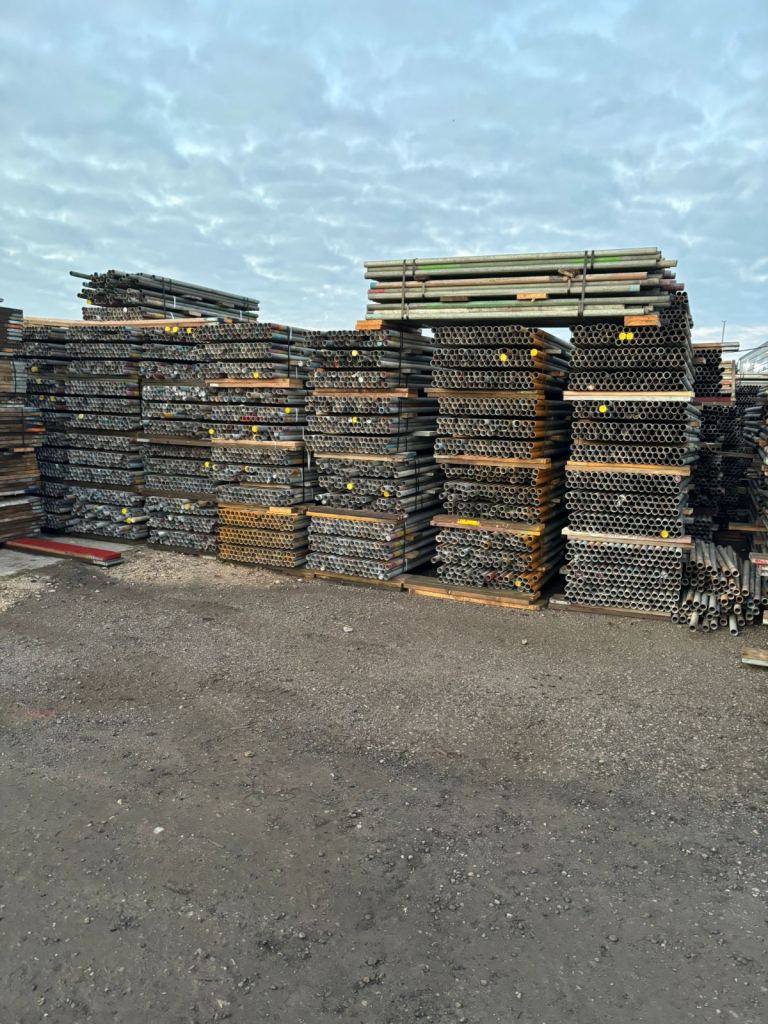
Scaffolding tube is one of the most useful materials you can buy if you want to build strong, practical frames without relying on timber alone.
It is not just used for scaffolding.
People use scaffolding tube and fittings for fruit cages, garden frames, racking, storage systems, car ports, canopies, handrails, barriers, animal pens, workshop shelving, log stores, allotment frames, temporary covers, market stalls, signage frames, pergolas, boat covers, industrial furniture and all kinds of DIY structures.
The reason it is so popular is simple.
A tube and fitting system lets you create strong metal frames using scaffold tube and clamps. You can build square frames, angled frames, upright posts, rails, braces, shelves, roof-style supports and custom layouts without needing to weld everything together.
For buyers searching things like scaffolding tube near me, scaffold tube for sale, used scaffold tube Nottingham, galvanised scaffold tube, tube and fitting system, scaffold fittings near me, scaffold tube racking, fruit cage frame scaffold tube, or scaffold tube car port, this guide explains what the tube is, how the fittings work and what you can realistically make with it.

Quick Answer: What Can Scaffolding Tube Be Used For?
Scaffolding tube can be used for far more than scaffolding. Because it is strong, galvanised and easy to connect with fittings, people use it for garden structures, storage frames, racking, fruit cages, car ports, shelters, handrails, barriers, workshop frames, animal enclosures, market stalls and heavy-duty DIY projects.
Common uses include:
- Fruit cages
- Vegetable cages
- Allotment frames
- Garden netting frames
- Raised bed covers
- Polytunnel-style frames
- Chicken run frames
- Dog run frames
- Timber racks
- Garage racking
- Workshop shelving
- Scaffold board shelves
- Log stores
- Bike racks
- Kayak and canoe storage
- Car ports
- Lean-to shelters
- Canopies
- Pergola-style frames
- Handrails
- Safety barriers
- Yard barriers
- Market stall frames
- Banner frames
- Sign frames
- Industrial furniture
- Table bases
- Retail display rails
- Boat cover frames
- Temporary roof-style covers
The main benefit is that scaffold tube and fittings are modular.
That means you can cut tube to length, join it with fittings, change the layout, extend the frame, dismantle it or rebuild it into something else later.
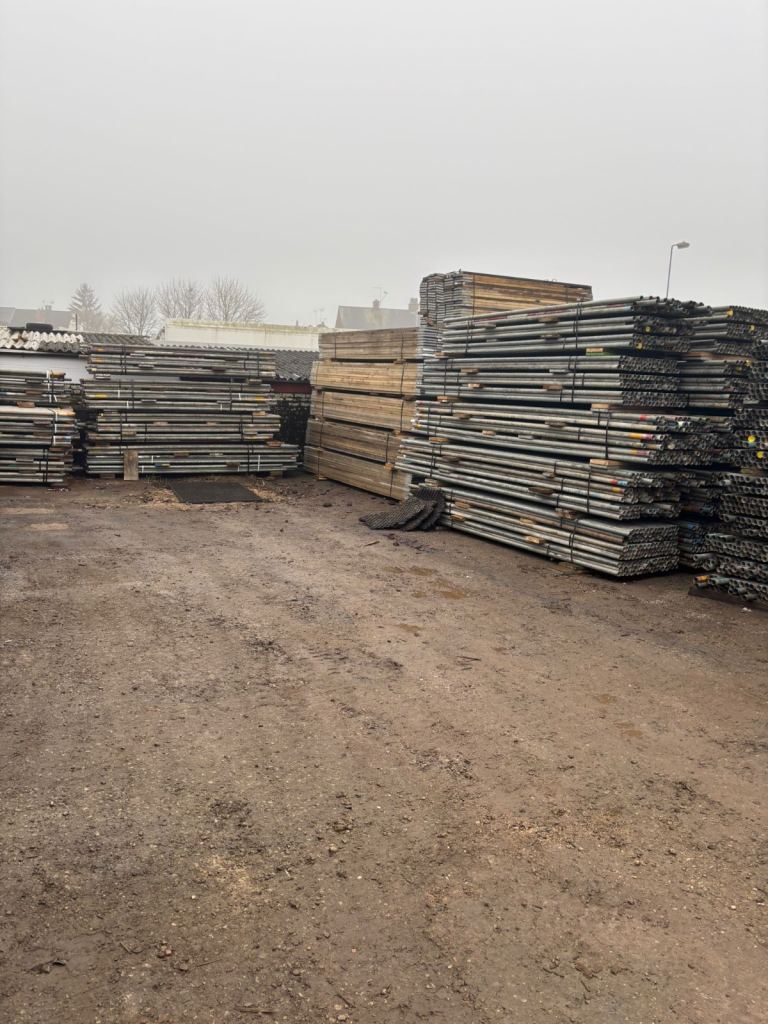
What Is Scaffolding Tube?
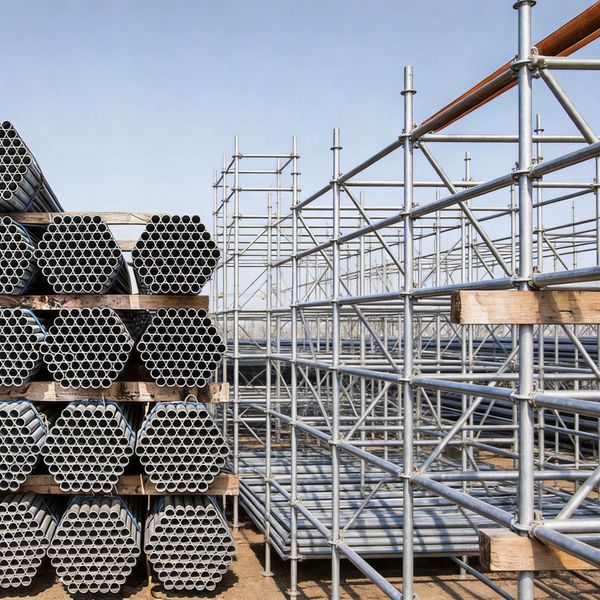
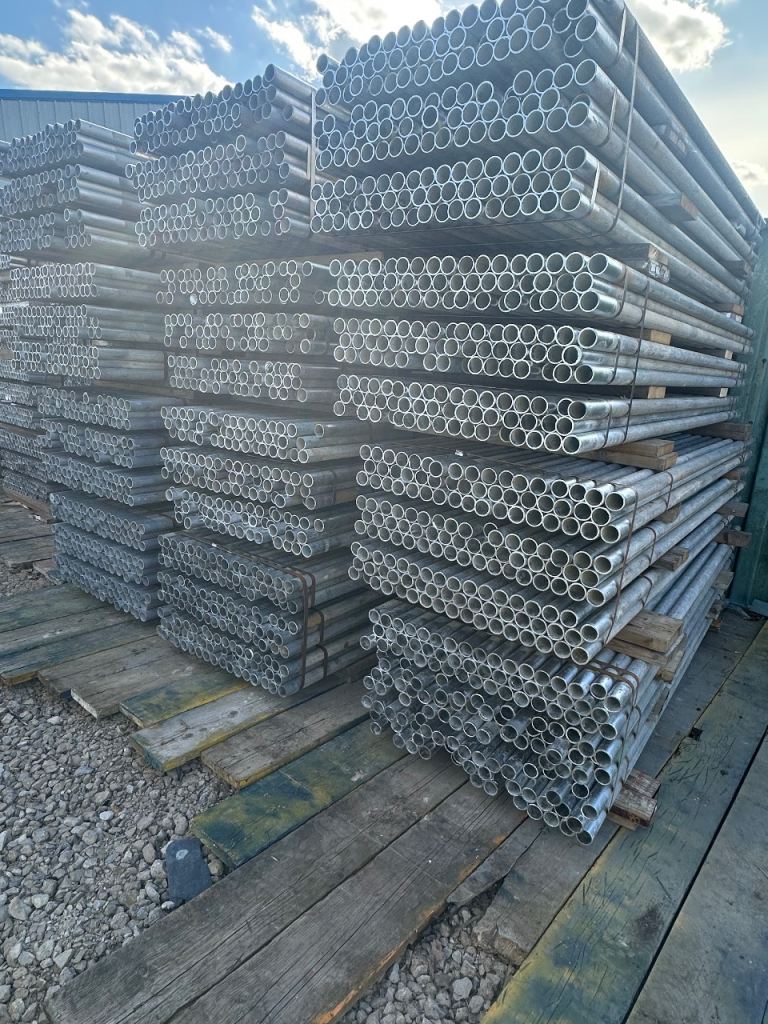
Scaffolding tube is a round steel tube commonly used with scaffold fittings to create tube and fitting scaffolding systems.
It is usually galvanised, which means it has a protective zinc coating to help resist rust and weathering. This makes it useful for outdoor projects, yards, gardens, workshops, farms, allotments and industrial storage.
A common scaffold tube size is approximately:
| Tube detail | Common size |
|---|---|
| Outside diameter | Approx. 48.3mm |
| Wall thickness | Commonly around 4mm |
| Material | Galvanised steel |
| System type | Tube and fitting |
| Common use | Frames, scaffold structures, rails, storage and DIY builds |
Tube lengths can vary depending on stock and supplier.
Common lengths include:
| Tube length | Common use |
|---|---|
| 1ft | Small brackets, short connectors, custom frame sections |
| 2ft | Small rails, display frames, short braces |
| 3ft | Shelving supports, compact frames, uprights |
| 4ft | Shelves, barriers, small frames |
| 5ft | Racking, fruit cages, handrails, garden structures |
| 6ft | Uprights, rails, frames, storage |
| 8ft | Longer rails, racking, garden frames |
| 10ft | Large frames, car ports, canopies, storage bays |
| 13ft | Long spans, rails, structures and cutting down |
| 16ft | Larger frames, long rails, covers and storage |
| 21ft | Full-length tube for big projects and cutting lists |
Not every project needs full-length tube.
Sometimes shorter lengths are better because they are easier to transport, easier to handle and easier to design around.
What Is a Tube and Fitting System?
A tube and fitting system is a way of building frames using scaffold tube and separate clamp fittings.
Instead of welding the tube together, you use fittings to connect tube at different angles.
The basic idea is:
- The tube creates the frame.
- The fittings clamp the tube together.
- The base plates spread load at the bottom.
- The braces stop the structure moving.
- The layout can be changed later if needed.
This is why scaffold tube is so flexible.
You can build a square storage rack one week, then reuse the tube and fittings later for a fruit cage, shelter, barrier or different frame.
The main system parts are:
| Part | What it does |
|---|---|
| Scaffold tube | Main frame material |
| Double couplers | Join tubes at a fixed right angle |
| Swivel couplers | Join tubes at adjustable angles |
| Single couplers / putlog clips | Fix lighter support tubes or boards in certain layouts |
| Sleeve couplers | Join two tubes end-to-end |
| Base plates | Sit under upright tubes |
| Board clamps | Help secure boards to tube in some project setups |
The beauty of the system is that you can create frames without needing complicated joinery.
Why People Use Scaffold Tube Instead of Timber
Timber is useful, but scaffold tube has some big advantages for certain projects.
Scaffold tube is:
- Strong
- Long-lasting
- Galvanised
- Reusable
- Modular
- Adjustable
- Easy to connect with fittings
- Good for outdoor frames
- Good for temporary or semi-permanent structures
- Useful for heavy-duty storage
- Good for industrial-style projects
Compared with timber, tube is often better for frames that need to be:
- Dismantled later
- Extended later
- Repositioned
- Made stronger with braces
- Used outdoors
- Built in a modular way
- Used in yards, gardens or workshops
Timber can rot, split or twist over time. Scaffold tube can still weather, but galvanised steel is usually better suited to long-term outdoor frame use than untreated timber.
That is why people often use scaffold tube for fruit cages, car ports, garden frames, racking and storage.
New Scaffold Tube vs Used Scaffold Tube
Both new and used scaffold tube can be useful.
Used scaffold tube is popular because it is practical, heavy-duty and often more cost-effective for DIY projects, yards, storage, gardens and frames.
New tube may be better if you want a cleaner appearance or a more consistent finish.
| Tube type | Best for | Main benefit |
|---|---|---|
| Used scaffold tube | DIY frames, storage, garden projects, yards, racking | Good value and practical |
| New scaffold tube | Cleaner builds, visible frames, premium projects | Neater appearance |
| Cut scaffold tube | Shelves, cages, smaller frames, exact projects | Less waste and easier handling |
| Full-length tube | Large frames, cutting lists, big projects | Maximum flexibility |
For many DIY and garden projects, used scaffold tube is absolutely ideal because the tube is being used for practical strength rather than decoration.
For shop displays, furniture, visible handrails or decorative industrial-style projects, cleaner tube may be preferred.
Common Scaffold Fittings Explained
The fittings are what make the tube useful.
If you are new to tube and fitting systems, the names can sound confusing at first. Once you understand what each fitting does, planning a frame becomes much easier.
Double Couplers
Double couplers are one of the most commonly used scaffold fittings.
They are used to connect two scaffold tubes together at a fixed 90-degree angle.
You would use doubles when you want to create square or rectangular frames.
Common uses include:
- Uprights to horizontal rails
- Racking frames
- Fruit cage corners
- Storage bays
- Shelving frames
- Handrails
- Barriers
- Car port frames
- Garage storage
- Workshop frames
- Garden structures
If you imagine a basic square frame, most of the main corner connections are usually made with double couplers.
For example, if you are building a storage rack, the upright tube and horizontal rail would usually be joined with a double coupler.
Swivel Couplers
Swivel couplers are used when two tubes need to meet at an angle.
Unlike a double coupler, a swivel can rotate, which makes it useful for diagonal braces and angled supports.
Common uses include:
- Diagonal bracing
- Roof-style frames
- A-frame supports
- Angled garden structures
- Car port bracing
- Canopy bracing
- Fruit cage strengthening
- Temporary covers
- Racking stability
- Irregular frames
Swivels are very useful because diagonal braces are what stop a frame from wobbling.
A rectangular frame with only uprights and horizontals can move if it is not braced properly. Adding diagonal tubes with swivel couplers makes the structure much more rigid.
Single Couplers / Putlog Clips
Single couplers, often called putlog clips, are usually used to connect a tube to another tube where the connection is not taking the same role as a main load-bearing right-angle joint.
In DIY projects, people often use them for lighter support rails, board supports, secondary fixings or simple connections depending on the design.
Common uses include:
- Supporting scaffold boards
- Secondary rails
- Light cross supports
- Shelf supports
- Garden frames
- Temporary rails
- Netting frames
- Simple DIY connections
For main structural corners, double couplers are usually preferred.
For lighter support points, singles can be useful depending on the layout.
Sleeve Couplers
Sleeve couplers are used to join two scaffold tubes end-to-end.
This is useful when you need a longer run and do not have one tube long enough.
Common uses include:
- Extending long rails
- Creating longer barriers
- Extending garden frames
- Long storage runs
- Canopy frames
- Long handrail sections
- Temporary structures
- Banner frames
For example, if you have two shorter lengths and want to create one longer rail, a sleeve coupler can join them together in line.
Always think carefully about where the join sits. For stronger builds, avoid placing joins in awkward high-stress areas if possible.
Base Plates
Base plates sit at the bottom of upright scaffold tubes.
They help spread the load and stop the tube end digging into the ground or surface.
Common uses include:
- Upright posts
- Fruit cages
- Racking uprights
- Temporary barriers
- Garden frames
- Car port frames
- Canopy posts
- Yard structures
- Storage frames
Base plates are especially useful when uprights are sitting on concrete, slabs, timber pads or another flat surface.
For soft ground, you may need to think more carefully about how the base is supported.
A tube sitting directly on soil can sink, move or become unstable depending on the project.
Board Clamps
Board clamps are used when scaffold boards need to be fixed or held to tube in certain setups.
They can be useful for projects that combine scaffold tube with reclaimed scaffold boards.
Common uses include:
- Scaffold board shelving
- Workbench tops
- Storage platforms
- Display tables
- Garden benches
- Racking surfaces
- Temporary work surfaces
- Rustic furniture
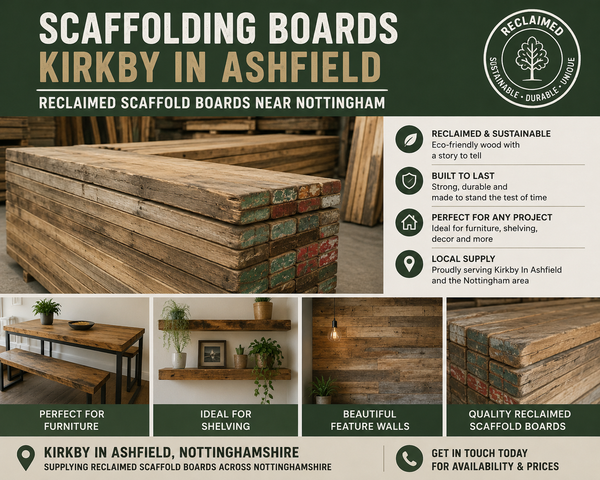
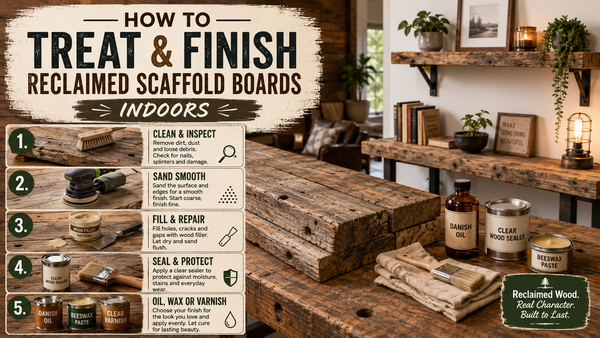
Combining scaffold tube and reclaimed scaffold boards is popular because it creates a strong industrial look.
The tube gives the frame, and the boards create shelves, tops or platforms.
How a Basic Scaffold Tube Frame Works
Most tube and fitting projects are based on a few simple frame parts.
Uprights
Uprights are the vertical tubes.
They act like posts.
They are used in:
- Racking
- Fruit cages
- Car ports
- Shelters
- Handrails
- Barriers
- Storage bays
- Garden frames
Ledgers
Ledgers are horizontal tubes that run along the length of the frame.
They connect uprights together.
They are used in:
- Storage frames
- Side rails
- Garden cages
- Shelving frames
- Barriers
- Long structures
Transoms
Transoms are horizontal tubes that run across the width of the frame.
They help create depth and support.
They are used in:
- Shelving
- Platforms
- Racking
- Car port frames
- Fruit cages
- Workbench frames
Braces
Braces are diagonal tubes.
They stop the frame from swaying or twisting.
They are used in:
- Taller frames
- Longer frames
- Car ports
- Racking
- Fruit cages
- Temporary covers
- Shelters
- Structures exposed to wind
The stronger and taller the frame, the more important bracing becomes.
Why Bracing Is So Important
A frame can look strong but still move if it is not braced.
This is one of the biggest mistakes people make with tube and fitting projects.
A square frame without diagonal bracing can rack from side to side.
This means it can lean, twist or wobble.
Bracing helps stop that.
Swivel couplers are commonly used for bracing because they allow diagonal tubes to meet the frame at an angle.
Bracing is especially important for:
- Fruit cages
- Racking
- Car ports
- Canopies
- Tall storage frames
- Long fence-style barriers
- Temporary covers
- Frames exposed to wind
- Frames with netting, sheeting or tarpaulin
Netting and sheeting can catch wind like a sail. That means even a garden fruit cage or cover frame can need proper bracing and anchoring.
Scaffold Tube for Fruit Cages
Fruit cages are one of the best DIY uses for scaffold tube.
People search for:
- scaffold tube fruit cage
- fruit cage frame scaffold tube
- metal fruit cage frame
- walk-in fruit cage frame
- allotment fruit cage
- fruit cage poles
- galvanised tube fruit cage
- netting frame for fruit bushes
- fruit cage near me
- DIY fruit cage frame
Scaffold tube works well for fruit cages because it is strong, reusable and suitable for outdoor use.
A fruit cage frame may be used to protect:
- Strawberries
- Raspberries
- Blueberries
- Blackberries
- Gooseberries
- Currants
- Fruit bushes
- Vegetable patches
- Seedlings
- Allotment crops
The basic idea is to create a rectangular tube frame, then attach netting over the top and sides.
Important things to think about include:
- Height
- Width
- Length
- Access door
- Netting support
- Wind exposure
- Bracing
- Ground fixing
- Base support
- How easy it is to remove netting
For a walk-in fruit cage, height matters. You want enough space to stand, pick fruit and move around.
For a low fruit cage over raised beds, shorter uprights may be enough.
Scaffold Tube for Vegetable Cages and Raised Bed Covers
Scaffold tube is also useful for vegetable cages and raised bed covers.
Instead of building a full walk-in cage, you can create a frame over raised beds.
This is useful for protecting crops from:
- Birds
- Rabbits
- Cats
- Deer in some areas
- Wind damage
- Netting collapse
- Children or pets stepping on beds
Common search phrases include:
- scaffold tube raised bed cover
- metal frame for raised beds
- vegetable cage frame
- allotment netting frame
- garden netting frame scaffold tube
- DIY veg cage
- raised bed frame with scaffold tube
For raised bed covers, tube can create a strong rectangular frame that holds netting above the plants.
This is often stronger and longer-lasting than thin plastic poles.
The tube can also be reused each season.
Scaffold Tube for Garden Netting Frames
Garden netting frames are another popular use.
A scaffold tube frame can hold:
- Bird netting
- Debris netting
- Shade netting
- Windbreak netting
- Crop protection mesh
- Insect mesh
- Temporary covers
The key is making sure the netting is not pulling the frame out of shape.
If a large area is covered, wind can put pressure on the frame. Good bracing and secure fixing become important.
For smaller vegetable beds, lighter frames may be enough.
For larger walk-in frames, use stronger layouts and more support.
Scaffold Tube for Polytunnel-Style Frames
Some people use scaffold tube for polytunnel-style or growing-frame projects.
A tube and fitting system can create a strong frame for covers, mesh or sheeting.
However, if you are using solid sheeting or plastic covers, wind load becomes a serious consideration.
A covered frame catches wind much more than an open frame.
For this type of project, think about:
- Wind direction
- Anchoring
- Bracing
- Height
- Roof shape
- Cover material
- Drainage
- Snow load
- How the cover is fixed
- Whether professional advice is needed
For small garden covers, it may be straightforward.
For large covered structures, do not guess. A badly anchored frame can move, lift or fail in strong weather.
Scaffold Tube for Car Ports
Scaffold tube is often searched for by people wanting to build car ports, lean-to shelters or vehicle covers.
Searches may include:
- scaffold tube car port
- scaffolding tube car port
- DIY car port scaffold tube
- metal tube car shelter
- scaffold tube canopy
- scaffold tube lean-to
- car port frame near me
- galvanised tube car port
Scaffold tube can be used to create the frame of a car port-style structure, but car ports need careful planning.
This is because they may be exposed to:
- Wind
- Rain
- Snow
- Roof weight
- Side pressure
- Ground movement
- Vehicle access
- Planning rules
- Neighbour boundaries
A car port is not just a small garden frame.
If you are building anything roofed, tall, fixed, near property, near vehicles or near people, it should be designed properly.
Things to consider include:
- How the uprights are fixed
- Whether base plates are enough
- Whether posts need anchoring
- How the roof is supported
- Whether the frame is braced
- What roofing material is used
- How water will drain
- Whether the structure needs permission
- Whether a competent person should check the design
Scaffold tube can be very useful for car port frames, but the design must be safe.
Scaffold Tube for Lean-To Shelters
Lean-to shelters are another popular project.
These may be used for:
- Firewood storage
- Bike storage
- Garden tools
- Outdoor equipment
- Bins
- Work areas
- Covered walkways
- Yard storage
- Vehicle cover
- Workshop extensions
A scaffold tube lean-to can be built against a wall or as a freestanding frame.
Common search phrases include:
- scaffold tube lean to
- DIY lean to frame
- scaffold tube shelter
- metal lean to frame
- scaffold tube roof frame
- outdoor storage shelter scaffold tube
The same warning applies as with car ports: once you add a roof or cover, wind and weight become important.
A frame that seems solid on a calm day may behave differently in bad weather.
Use bracing, proper fixings and suitable materials.
Scaffold Tube for Racking
Racking is one of the most practical uses for scaffold tube.
People search for:
- scaffold tube racking
- scaffold tube storage rack
- scaffold tube timber rack
- scaffold tube garage racking
- scaffold tube shelving
- heavy duty storage rack scaffold tube
- scaffold tube workshop storage
- scaffold tube log rack
- scaffold tube pipe rack
Tube and fittings are ideal for racking because you can create strong rectangular frames with adjustable lengths and heights.
Racking can be used for:
- Timber storage
- Scaffold board storage
- Sheet material storage
- Pipe storage
- Tools
- Ladders
- Garden equipment
- Stock storage
- Workshop items
- Farm equipment
- Metal lengths
- Building materials
A simple rack may use uprights, horizontal rails and braces.
For shelves, you can combine scaffold tube with scaffold boards or timber boards.
Important racking considerations include:
- Weight of stored items
- Height of rack
- Depth of rack
- Support spacing
- Bracing
- Base stability
- Wall fixing if needed
- Floor condition
- Safe access
- Preventing collapse or tipping
Racking should not be overloaded.
If the rack will hold heavy materials, design it properly and use enough supports.
Scaffold Tube for Timber Storage
Scaffold tube works very well for timber racks.
Timber storage needs to keep long lengths straight, organised and off the floor.
A scaffold tube timber rack can be used for:
- Scaffold boards
- Decking boards
- Timber lengths
- Fence posts
- Battens
- Sheet timber support frames
- Reclaimed wood
- Joinery timber
- Workshop stock
The advantage is that you can build long horizontal rails and support them with uprights.
If you need several levels, the frame can be built like a rack.
Think about:
- How much timber will be stored
- How heavy it is
- How long the lengths are
- How often you need access
- Whether the rack is freestanding or wall-supported
- How to stop timber rolling or sliding
- Whether diagonal bracing is needed
A good rack saves floor space and keeps timber organised.
Scaffold Tube for Garage Shelving
Garage shelving is another strong use case.
Scaffold tube and scaffold boards can create heavy-duty garage shelving that feels much stronger than lightweight flat-pack units.
Searches may include:
- scaffold tube garage shelves
- scaffold board garage shelving
- heavy duty garage shelves scaffold tube
- DIY garage racking scaffold tube
- scaffold tube shelving unit
- metal tube shelving frame
A basic garage shelf system may include:
- Upright tubes
- Front and back rails
- Side rails
- Cross supports
- Scaffold boards as shelves
- Bracing
- Base plates
This can be useful for storing:
- Paint tins
- Tools
- Boxes
- Garden equipment
- Power tools
- Car parts
- Workshop supplies
- DIY materials
The main thing is to plan the shelf depth and support spacing properly.
Scaffold boards are strong-looking and chunky, but every shelf still needs proper support.
Scaffold Tube for Workshop Benches
A tube and fitting system can create strong workshop bench frames.
This is useful for:
- Garages
- Sheds
- Workshops
- Fabrication areas
- Timber yards
- Farms
- Storage rooms
- Hobby spaces
A scaffold tube workbench can use tube for the frame and scaffold boards, plywood or other timber for the top.
Benefits include:
- Strong frame
- Adjustable size
- Industrial look
- Easy to repair
- Can be dismantled
- Can be extended
- Works well with scaffold boards
Search phrases include:
- scaffold tube workbench
- scaffold board workbench
- scaffold tube bench frame
- DIY workbench scaffold tube
- heavy duty workbench frame
For a workbench, think about the type of work being done.
A bench for light storage is different from a bench used for hammering, cutting or heavy equipment.
Scaffold Tube for Log Stores
Scaffold tube is excellent for log stores and firewood racks.
It keeps logs off the ground and allows airflow.
Common searches include:
- scaffold tube log store
- metal log store frame
- scaffold tube firewood rack
- DIY log store scaffold tube
- outdoor wood store frame
A basic log store may use:
- Uprights
- Side rails
- Back rails
- Roof frame
- Bracing
- Scaffold boards or timber base
- Optional roof covering
For firewood storage, airflow matters.
Do not completely seal logs in without ventilation. The aim is to keep rain off while allowing air to move.
A scaffold tube frame can work well because it is strong and open.
Scaffold Tube for Bike Racks
Scaffold tube can be used for bike storage frames and cycle racks.
This can be useful for:
- Garages
- Schools
- Workplaces
- Yards
- Community spaces
- Sheds
- Bike repair areas
Searches may include:
- scaffold tube bike rack
- DIY bike rack scaffold tube
- metal bike storage frame
- scaffold tube cycle rack
- bike shelter scaffold tube
Tube is useful because it can create simple rails, stands or storage frames.
If building public or commercial bike storage, think carefully about security, fixings, trip hazards and user safety.
Scaffold Tube for Handrails
Scaffold tube can be used for handrails, barriers and edge protection-style layouts.
Common uses include:
- Yard handrails
- Workshop handrails
- Garden steps
- Temporary rails
- Access routes
- Farm areas
- Commercial yards
- Outdoor barriers
- Boundary rails
Searches may include:
- scaffold tube handrail
- scaffold tube barrier
- galvanised tube handrail
- scaffold tube safety rail
- metal handrail tube and fittings
A tube and fitting handrail usually uses uprights, top rails and sometimes mid rails.
For any handrail that protects people from a fall or is used in a workplace, proper safety standards and competent installation matter.
Do not guess on safety-critical handrails.
For simple garden or yard guide rails, scaffold tube can be very practical.
Scaffold Tube for Barriers and Yard Protection
Scaffold tube can be used to create barriers in yards, workshops, farms and commercial spaces.
Uses include:
- Vehicle separation
- Pedestrian routes
- Yard boundaries
- Stock areas
- Material zones
- Loading areas
- Temporary barriers
- Queue rails
- Event barriers
- Storage dividers
The tube is strong and visible, and the fittings allow you to adjust the layout.
For barriers, think about:
- What the barrier is stopping
- Whether vehicles could hit it
- Whether it needs to be fixed down
- Height
- Spacing
- Visibility
- Trip hazards
- Sharp edges
- End caps if needed
A light guide barrier is different from a vehicle impact barrier.
Design it for the real use.
Scaffold Tube for Market Stalls
Tube and fittings can be used to create strong market stall frames and pop-up retail displays.
Common searches include:
- scaffold tube market stall
- scaffold tube display frame
- scaffold tube retail stand
- scaffold tube clothes rail
- industrial display frame
- scaffold tube stall frame
Scaffold tube works well for:
- Clothes rails
- Display frames
- Banner frames
- Pop-up shop displays
- Outdoor stalls
- Product shelving
- Rustic industrial retail setups
Because the tube and fittings can be dismantled, they are useful for temporary setups.
However, if used outdoors, remember that signage, tarps and banners can catch wind.
A stall frame should be stable, weighted or anchored properly.
Scaffold Tube for Sign Frames and Banner Frames
Scaffold tube is often used for sign frames because it can be built to almost any size.
Uses include:
- Yard signs
- Event signs
- Business signage
- Temporary banners
- Direction signs
- Site signs
- Display boards
- Advertising frames
Searches may include:
- scaffold tube sign frame
- scaffold tube banner frame
- outdoor sign frame scaffold tube
- temporary sign frame tube
- galvanised tube sign stand
For banner frames, wind is the main issue.
A solid banner can act like a sail. Even a simple sign frame should be braced and weighted properly if used outside.
Scaffold Tube for Industrial Furniture
Scaffold tube is popular for industrial-style furniture.
People use it for:
- Table bases
- Desk frames
- Coffee table legs
- Shelving frames
- Clothes rails
- TV units
- Bar frames
- Shop counters
- Display tables
- Bench frames
Search phrases include:
- scaffold tube furniture
- scaffold tube table legs
- scaffold tube desk frame
- scaffold tube clothes rail
- industrial scaffold tube furniture
- scaffold board and tube furniture
The combination of scaffold tube and reclaimed scaffold boards gives a strong industrial style.
For furniture, cleaner tube and nicer boards may be preferred.
Think about:
- Sharp edges
- Clean tube
- Matching fittings
- Stable base
- Floor protection
- Sanded boards
- Sealed timber
- Safe corners
Furniture does not need to look perfect, but it should be safe and comfortable to use.
Scaffold Tube for Clothes Rails
Scaffold tube can make excellent clothes rails.
It is strong, simple and industrial-looking.
Common uses include:
- Retail clothes rails
- Bedroom rails
- Walk-in wardrobe rails
- Market stall rails
- Laundry room rails
- Costume storage
- Workshop clothing rails
Searches include:
- scaffold tube clothes rail
- industrial clothes rail scaffold tube
- heavy duty clothes rail scaffold tube
- scaffold tube wardrobe rail
A clothes rail may use two uprights, a top rail and base supports.
If it will hold heavy clothing, it needs a stable base or wall fixing.
Scaffold Tube for Pergola-Style Frames
Scaffold tube can be used for pergola-style garden frames.
People may search:
- scaffold tube pergola
- metal pergola frame scaffold tube
- scaffold tube garden frame
- scaffold tube outdoor frame
- DIY pergola scaffold tube
A pergola-style frame may support:
- Climbing plants
- Shade cloth
- Lights
- Garden features
- Hanging baskets
- Outdoor seating areas
If the frame supports a solid roof or heavy covering, it becomes more like a shelter or canopy and needs more careful design.
For climbing plants and open frames, scaffold tube can be very useful.
Scaffold Tube for Chicken Runs and Animal Pens
Scaffold tube can be used to build animal enclosures, but the design must suit the animal and location.
Possible uses include:
- Chicken run frames
- Dog run frames
- Goat pen rails
- Temporary animal pens
- Aviary-style frames
- Mesh supports
- Farm barriers
Searches may include:
- scaffold tube chicken run
- scaffold tube dog run
- metal chicken run frame
- scaffold tube animal pen
- galvanised tube animal enclosure
Scaffold tube is useful because it creates a strong frame for mesh or panels.
Things to consider:
- Animal size
- Mesh type
- Door access
- Ground fixing
- Sharp edges
- Predator protection
- Wind exposure
- Roof netting or cover
- Cleaning access
For animals, avoid sharp edges, loose fittings or unstable frames.
Scaffold Tube for Boat Covers and Narrowboat Frames
Scaffold tube can be used for temporary cover frames around boats, narrowboats and outdoor projects.
Searches may include:
- scaffold tube boat cover frame
- scaffold tube narrowboat cover
- scaffold tube temporary roof
- scaffold tube cover frame
- boat canopy frame scaffold tube
The tube can create a frame to hold tarpaulin or sheeting.
However, covers can catch wind, and long frames need proper support and bracing.
For anything over a boat, vehicle or valuable item, make sure the structure is stable and suitable for the conditions.
Do not rely on guesswork for long spans or exposed areas.
Scaffold Tube for Temporary Roofs and Covers
Tube and fittings are often used in temporary roof-style frames, but this is a more serious use.
A temporary roof or large cover can be affected by:
- Wind uplift
- Rain loading
- Snow loading
- Sheeting tension
- Frame movement
- Ground anchoring
- Span size
- Access underneath
- Public safety
For small DIY covers, simple frames may be fine.
For larger covers, work areas, buildings, boats, vehicles or public spaces, a competent person should design or check the setup.
Scaffold tube is strong, but the structure is only as good as the design, bracing, fixings and anchoring.
Scaffold Tube for Car Restoration Frames
People working on cars sometimes use tube for frames, shelters, racks and work areas.
Uses include:
- Parts storage
- Temporary car covers
- Engine storage frames
- Body panel racks
- Workshop dividers
- Tool storage
- Paint booth-style frames
- Shelters
Searches may include:
- scaffold tube car frame
- scaffold tube car shelter
- scaffold tube garage frame
- DIY car port scaffold tube
- scaffold tube workshop frame
For anything around vehicles, make sure the frame cannot fall, move or damage the car.
If using sheeting, account for wind.
Scaffold Tube for Farm and Yard Projects
Scaffold tube is useful on farms, yards and smallholdings.
Common uses include:
- Gates
- Rails
- Barriers
- Animal pens
- Feed storage
- Equipment racks
- Sign frames
- Work areas
- Temporary shelters
- Fencing frames
- Hay or timber storage
The benefit is durability.
Galvanised tube handles rough environments better than many lighter materials.
However, anything holding animals, vehicles or heavy materials must be designed safely.
Scaffold Tube for Allotments
Allotment users often like scaffold tube because it is reusable and strong.
It can be used for:
- Fruit cages
- Bean frames
- Netting frames
- Raised bed covers
- Tool racks
- Water butt stands
- Compost bay frames
- Polytunnel supports
- Crop protection frames
- Temporary windbreaks
Allotment search phrases include:
- scaffold tube allotment
- scaffold tube fruit cage
- allotment frame scaffold tube
- vegetable cage frame
- scaffold tube crop protection
- galvanised tube allotment frame
For allotments, tube is often better than temporary plastic poles because it can be reused year after year.
Scaffold Tube for Garden Bars and Outdoor Kitchens
Scaffold tube and scaffold boards can be used to create rustic outdoor bars and garden kitchen frames.
Common uses include:
- Garden bar frames
- Outdoor counter frames
- BBQ area shelving
- Bottle shelves
- Worktop supports
- Display racks
- Seating frames
- Back bars
Search phrases include:
- scaffold tube garden bar
- scaffold board bar frame
- outdoor bar scaffold tube
- scaffold tube BBQ area
- garden kitchen scaffold tube
For outdoor bars, scaffold tube gives an industrial look and pairs well with reclaimed scaffold boards.
Use proper supports, treat the timber and think about weather protection.
Scaffold Tube for Retail and Commercial Displays
Businesses often use scaffold tube for rustic-industrial display setups.
Uses include:
- Clothes rails
- Product shelving
- Wall displays
- Table frames
- Pop-up stands
- Salon shelving
- Barbershop interiors
- Cafe shelving
- Shop counters
- Signage frames
Searches include:
- scaffold tube retail display
- scaffold tube clothes rail
- scaffold tube shop shelving
- industrial shop display frame
- scaffold board retail display
For commercial interiors, finish matters.
Cleaner tube, consistent fittings and sanded scaffold boards can make the project look intentional rather than rough.
Scaffold Tube for Home Gym Frames
Some people search for scaffold tube to build home gym frames, pull-up bars or training rigs.
Scaffold tube is strong, but gym equipment carries moving human weight, impact and safety risk.
If using tube for any exercise frame, take safety seriously.
Think about:
- Load
- Movement
- Fixing
- Bracing
- Grip
- Height
- Floor fixing
- Wall fixing
- Fitting tightness
- Professional advice
Do not guess with anything that supports a person’s body weight.
For simple storage racks for gym equipment, scaffold tube can be very useful.
For pull-up bars or lifting rigs, proper design is essential.
Scaffold Tube for Handyman and DIY Businesses
Scaffold tube is useful for small businesses that need adaptable storage or work frames.
Examples include:
- Timber storage
- Stock racking
- Tool racks
- Workshop benches
- Van loading frames
- Display rails
- Signage frames
- Material bays
- Temporary work areas
- Customer collection racks
Because the tube and fittings can be reused, a business can change layouts over time.
This is useful when stock changes, workshop space changes or seasonal products need different storage.
Scaffold Tube and Scaffold Boards Together
One of the best combinations is scaffold tube with reclaimed scaffold boards.
The tube creates the frame.
The boards create the shelves, tops or surfaces.
This combination is popular for:
- Garage shelving
- Workshop benches
- Rustic tables
- Garden bars
- Retail displays
- Scaffold board racks
- Outdoor benches
- Potting benches
- Storage units
- Market stalls
The look is strong, industrial and rustic.
The tube gives the structure. The boards add the usable surface.
For example, a simple storage rack might use scaffold tube uprights and rails with scaffold boards laid across as shelves.
A garden bar might use tube for the frame and scaffold boards for the counter and front panels.
How to Plan a Scaffold Tube Project
Before buying tube and fittings, plan the project properly.
Start with these questions:
- What are you building?
- Is it indoor or outdoor?
- Does it need to hold weight?
- Will it be covered with sheeting or netting?
- Will it be exposed to wind?
- Does it need to be permanent or temporary?
- Does it need to be dismantled later?
- How tall will it be?
- How wide will it be?
- How deep will it be?
- How will it be braced?
- How will the uprights be supported?
- What fittings are needed?
- What tube lengths are best?
- Can it be transported safely?
A simple drawing can help massively.
You do not need a professional drawing for a basic garden rack, but you should at least sketch the uprights, rails, braces and measurements.
How to Work Out Tube Lengths
When planning tube lengths, think in sections.
A frame usually has:
- Uprights
- Top rails
- Bottom rails
- Cross rails
- Braces
- Optional roof rails
- Optional shelf supports
- Optional door frame
For example, a simple rectangular fruit cage might need:
- 4 corner uprights
- 2 long top side rails
- 2 short top end rails
- 2 long bottom side rails if needed
- 2 short bottom end rails if needed
- Diagonal braces
- Extra rails for a door
- Extra supports depending on size
A storage rack might need:
- 4 or more uprights
- Front rails
- Back rails
- Side rails
- Shelf supports
- Diagonal braces
- Base plates
- Scaffold boards or shelf boards
Write down each tube length before ordering.
Then add a little allowance for cuts, changes or mistakes if needed.
How Many Fittings Do You Need?
The number of fittings depends on the frame.
A common mistake is underestimating fittings.
Every connection needs a fitting.
A basic frame may need more than people expect because each upright, rail, brace and shelf support must be clamped properly.
As a rough planning idea:
| Frame part | Likely fittings |
|---|---|
| Upright to horizontal rail | Double couplers |
| Diagonal brace to frame | Swivel couplers |
| Tube extension | Sleeve coupler |
| Upright base | Base plate |
| Board fixed to tube | Board clamp or suitable fixing |
| Secondary support rail | Single or double depending on use |
If you are building a strong frame, do not cut corners on fittings.
The fittings are what hold everything together.
Example: Basic Fruit Cage Tube and Fitting Plan
A simple fruit cage may include:
- Upright tubes at the corners
- Extra uprights along longer sides
- Top rails around the perimeter
- Lower rails if needed
- Diagonal braces
- Door opening
- Netting support
- Base plates or ground fixings
- Fittings for all connections
Possible fittings:
- Double couplers for corners
- Swivel couplers for diagonal bracing
- Sleeve couplers if extending long rails
- Base plates for uprights
- Singles or clips for lighter supports depending on layout
This creates a strong frame that can hold netting above fruit bushes.
For larger fruit cages, add more uprights and braces.
Example: Scaffold Tube Racking Plan
A basic racking system may include:
- Uprights at each corner
- Extra uprights for longer runs
- Front horizontal rails
- Back horizontal rails
- Side rails
- Shelf support rails
- Diagonal braces
- Base plates
- Scaffold boards as shelves
Possible fittings:
- Double couplers for square frame joints
- Swivel couplers for braces
- Base plates under uprights
- Board clamps if fixing boards to tube
- Sleeve couplers for long rail extensions
For heavy storage, use enough uprights and keep shelf spans sensible.
Long unsupported shelf spans can sag or overload the frame.
Example: Scaffold Tube Car Port Frame
A car port-style frame may include:
- Upright posts
- Base plates or fixed bases
- Side rails
- Roof rails
- Cross rails
- Diagonal braces
- Roof support members
- Cover or roofing system
- Proper anchoring
Possible fittings:
- Double couplers for main joints
- Swivel couplers for braces and roof angles
- Sleeve couplers for extended rails
- Base plates or stronger fixing methods
- Additional fittings depending on design
This is a more serious project because of wind and roof loads.
For any car port, canopy or roofed structure, get the design checked if you are unsure.
Example: Scaffold Tube Garage Shelving
A simple garage shelf frame may include:
- Four uprights
- Two front rails
- Two back rails
- Side rails
- Cross supports
- Diagonal brace
- Scaffold boards as shelves
- Base plates
For multiple shelf levels, repeat the rails at each level.
Possible fittings:
- Double couplers for main joints
- Swivels for diagonal bracing
- Board clamps if fixing boards
- Base plates for upright feet
This type of system can be strong, practical and adaptable.
Choosing the Right Tube Lengths
Shorter tubes are useful when you want easy handling and less cutting.
Longer tubes are useful when you want flexibility.
| Tube length | Good for |
|---|---|
| 1ft–3ft | Small supports, brackets, short rails, custom joints |
| 4ft–6ft | Shelving, uprights, garden frames, racking |
| 8ft | Medium frames, storage, rails, fruit cages |
| 10ft | Larger frames, canopies, racks, long rails |
| 13ft | Full runs, large projects, cutting into smaller lengths |
| 16ft | Long rails, shelters, large frames |
| 21ft | Big projects, long runs, cutting lists |
If you are unsure, plan the finished size first.
Do not just buy random lengths because they are available.
A cut list saves money and reduces waste.
Tube and Fittings for Fruit Cages: What to Think About
For a fruit cage, plan:
- Height
- Width
- Length
- Number of uprights
- Door access
- Netting type
- Bracing
- Base support
- Ground conditions
- Wind exposure
- Whether it needs to be moved later
A walk-in fruit cage needs more tube than a low raised bed cover.
A large cage in an exposed allotment needs better bracing than a small frame in a sheltered garden.
Also think about how you will attach the netting. Netting should be secure but not pulling the frame out of shape.
Tube and Fittings for Racking: What to Think About
For racking, plan:
- What will be stored
- Weight per shelf
- Shelf depth
- Rack height
- Rack width
- Number of levels
- Support spacing
- Bracing
- Base stability
- Whether wall fixing is needed
- Access space in front
Heavy items should be stored lower down where possible.
Tall narrow racks can tip if not fixed or weighted correctly.
If storing heavy materials, use more uprights and shorter spans.
Tube and Fittings for Car Ports: What to Think About
For car ports and canopies, plan carefully.
Important points include:
- Overall height
- Overall width
- Roof pitch
- Roof material
- Wind exposure
- Snow and rain loading
- Ground fixing
- Drainage
- Bracing
- Connection strength
- Distance from buildings or boundaries
- Planning or permission issues
- Safety if near vehicles or people
Because a car port has a roof, it is affected by wind in a way that an open frame is not.
If in doubt, get professional advice before building.
Tube and Fittings for Garden Frames: What to Think About
For garden frames, plan:
- What the frame supports
- Whether plants will climb it
- Whether netting is attached
- Whether covers will be used
- Whether it needs to be moved
- Whether it is exposed to wind
- How it sits on the ground
- Whether it needs base plates or ground anchors
- Whether the tube will be visible
- Whether the layout can be extended later
Garden frames can be simple or complex.
A bean frame may be very different from a walk-in fruit cage or covered seating frame.
Tube and Fittings for Handrails: What to Think About
For handrails, consider:
- Height
- Post spacing
- Top rail position
- Mid rail if needed
- Fixing method
- Surface below
- Whether people rely on it for safety
- Whether it is temporary or permanent
- Whether it is in a workplace or public area
For any safety-critical rail, proper standards and competent installation matter.
A decorative garden rail and a fall-protection handrail are not the same thing.
Common Mistakes When Buying Scaffold Tube
Here are common mistakes buyers make.
1. Buying tube before planning the frame
Always sketch the frame and measure first.
2. Forgetting fittings
Every connection needs a fitting. Fittings can be a big part of the project.
3. Not adding braces
Bracing is what stops frames from wobbling.
4. Using the wrong fitting
Double couplers, swivels, sleeves and singles all do different jobs.
5. Ignoring wind
Netting, tarps, banners and roofs can catch wind.
6. Not thinking about the base
Uprights need proper support.
7. Overloading racking
Storage frames need enough uprights, rails and bracing.
8. Making spans too long
Long unsupported spans can bend or become unsafe.
9. Not tightening fittings properly
Loose fittings can make the frame move.
10. Guessing on safety-critical builds
If people, vehicles or valuable items are underneath, get the design checked.
Safety Notes for Scaffold Tube DIY Projects
Scaffold tube is strong, but it must be used sensibly.
For DIY projects, always think about:
- Load
- Height
- Wind
- Ground conditions
- Bracing
- Fixings
- Sharp edges
- Stability
- Access
- Whether people will climb on it
- Whether it could fall onto someone
- Whether it supports a roof or cover
Scaffold tube should not be used for access scaffolding, working platforms or safety-critical structures unless designed and erected by competent people.
For storage, garden frames and DIY projects, use common sense and do not overload the frame.
For car ports, roofed structures, handrails, public areas, work areas or anything supporting people, vehicles or heavy loads, get proper advice.
Why Galvanised Scaffold Tube Is Useful Outdoors
Galvanised scaffold tube is popular outdoors because the zinc coating helps protect the steel from rust.
This makes it useful for:
- Gardens
- Allotments
- Yards
- Farms
- Workshops
- Outdoor storage
- Fruit cages
- Car ports
- Canopies
- Barriers
- Racking
- Log stores
Used galvanised tube may have marks, scratches and signs of previous use, but it can still be very useful for practical projects.
If appearance matters, choose cleaner pieces.
If practicality matters more, used tube can be ideal.
How to Transport Scaffold Tube
Scaffold tube can be long and heavy.
Before collecting, think about:
- Tube length
- Vehicle size
- Roof bars
- Trailer
- Van space
- Safe loading
- Overhang
- Strapping
- Weight
- Legal and safe transport
Shorter lengths are easier to move.
Full-length tube may need a van, trailer or delivery.
If you are buying a large quantity, delivery may be much easier.
How to Store Scaffold Tube
Store tube safely before using it.
Good storage tips include:
- Keep lengths stacked neatly
- Stop tubes rolling
- Store off the ground if possible
- Keep walkways clear
- Separate lengths by size
- Keep fittings in tubs or boxes
- Avoid leaving sharp ends where people walk
- Keep heavy stacks stable
- Do not overload shelves or racks
Tube can roll easily, so think about safety when stacking.
How to Store Scaffold Fittings
Fittings are small but heavy.
Keep them organised by type.
Useful categories include:
- Doubles
- Swivels
- Singles
- Sleeves
- Base plates
- Board clamps
- Bolts or spares
If you are building a project, having fittings sorted saves time.
It also helps you see if you have enough before you start.
What to Ask Before Buying Scaffold Tube
Before buying scaffold tube, ask:
- What lengths are available?
- Is it galvanised scaffold tube?
- Is it new or used?
- What condition is it in?
- Can it be cut to size?
- What fittings are available?
- Are doubles available?
- Are swivels available?
- Are singles available?
- Are sleeve couplers available?
- Are base plates available?
- Are board clamps available?
- Is delivery available?
- Can I collect?
- Is there enough quantity for my project?
If you already know what you are building, explain the project.
For example:
“I’m building a fruit cage.”
“I’m making garage racking.”
“I need tube for a car port frame.”
“I’m making a log store.”
“I’m building scaffold board shelving.”
This helps the supplier understand what lengths and fittings may be useful.
What to Send for a Scaffold Tube Quote
A clear message gets a better quote.
You can send:
- Tube lengths needed
- Quantity of each length
- Fittings needed
- Project type
- Delivery postcode
- Whether you can collect
- Whether you need cutting
- Whether the project is indoor or outdoor
Example message:
“Hi, I’m looking for scaffold tube and fittings for a fruit cage. I need 8 x 6ft tubes, 6 x 8ft tubes, 4 x 10ft tubes, plus doubles, swivels and base plates. I’m based in [area]. Can you quote for collection or delivery please?”
Another example:
“Hi, I need scaffold tube for garage racking. I’m after 4 x 6ft uprights, 6 x 8ft rails, 4 x 4ft side rails, doubles, swivels and base plates. Can you price that please?”
For bigger projects, a simple sketch or list can help.
Buying Scaffold Tube in Nottingham, Nottinghamshire, Derbyshire and South Yorkshire
People searching locally may use phrases like:
- scaffolding tube Nottingham
- scaffold tube Nottinghamshire
- scaffold tube Kirkby in Ashfield
- scaffold tube Mansfield
- scaffold tube Sutton in Ashfield
- scaffold tube Derbyshire
- scaffold tube Chesterfield
- scaffold tube Sheffield
- scaffold tube South Yorkshire
- scaffold fittings near me
- scaffold tube and fittings near me
- used scaffold tube near me
- galvanised scaffold tube for sale
- tube and fitting system near me
Local buying is useful because tube is heavy and long.
If you are based around Nottinghamshire, Nottingham, Derbyshire or South Yorkshire, it can be easier to collect or arrange delivery from a local supplier rather than buying blind online.
This is especially true for large orders, full-length tube or mixed loads of tube, boards and fittings.
Search Terms People Use When Looking to Buy Scaffold Tube
People search in many different ways.
Some search by product.
Some search by project.
Some search by location.
Useful buyer-intent searches include:
- scaffold tube for sale
- scaffolding tube for sale
- used scaffold tube for sale
- galvanised scaffold tube near me
- scaffold tube and fittings near me
- scaffold fittings for sale
- tube and fitting scaffold parts
- scaffold tube fruit cage
- scaffold tube car port
- scaffold tube racking
- scaffold tube log store
- scaffold tube handrail
- scaffold tube garden frame
- scaffold tube pergola
- scaffold tube lean to
- scaffold tube shelving
- scaffold tube storage rack
- scaffold tube workshop bench
- scaffold tube market stall
- scaffold tube clothes rail
- scaffold tube banner frame
- scaffold tube chicken run
- scaffold tube dog run
- scaffold tube boat cover
- scaffold tube allotment frame
These are valuable searches because they show project intent.
A buyer is not just looking for “metal tube”. They are looking for a way to build something.
That is why a good scaffold tube supplier should explain the tube, fittings, sizes and project uses clearly.
Scaffold Tube vs Kee Klamp Style Systems
Some people compare scaffold tube and fittings with clamp-style handrail systems.
Both can be useful.
Scaffold tube and fittings are often used for practical, heavy-duty and temporary frames.
Kee Klamp-style systems are often used for cleaner handrails, retail displays and visible architectural-style projects.
| System | Best for |
|---|---|
| Scaffold tube and fittings | Racking, garden frames, storage, temporary structures, practical builds |
| Handrail clamp systems | Clean handrails, shop displays, design-led interiors |
| Welded steel frames | Permanent custom structures |
| Timber frames | Basic DIY, garden projects, lower-cost builds |
| Plastic pipe frames | Lightweight netting and small garden covers |
For heavy-duty DIY and yard projects, scaffold tube is often a strong and flexible choice.
Scaffold Tube vs Timber for Fruit Cages
For fruit cages, many people compare scaffold tube with timber posts.
| Feature | Scaffold tube | Timber |
|---|---|---|
| Weather resistance | Galvanised steel is good outdoors | Timber can rot if untreated |
| Strength | Strong and rigid | Depends on timber size |
| Reusability | Easy to dismantle and reuse | Harder to reuse once fixed |
| Adjustability | Fittings can be changed | Usually fixed once built |
| Look | Industrial and practical | Natural garden look |
| Netting support | Very good with proper frame | Good but can move over time |
Timber can look more natural, but scaffold tube can last well and be reused.
For allotments and practical garden builds, scaffold tube is a very strong option.
Scaffold Tube vs Timber for Racking
For racking, scaffold tube can be better than timber when the storage is heavy or changeable.
| Feature | Scaffold tube racking | Timber racking |
|---|---|---|
| Strength | Very strong with correct design | Depends on timber and fixings |
| Adjustability | Can be rebuilt or extended | Harder to adjust |
| Outdoor use | Galvanised tube suits yards | Timber needs treatment |
| Industrial use | Good for workshops and yards | Good for lighter storage |
| Appearance | Industrial | More traditional |
| Reuse | Very reusable | Less reusable once cut and screwed |
For heavy-duty storage, tube and fittings are very practical.
Project Ideas Using Scaffold Tube and Fittings
Here are some scaffold tube project ideas.
Garden and allotment
- Fruit cage
- Vegetable cage
- Raised bed cover
- Bean frame
- Trellis frame
- Polytunnel-style frame
- Compost bay frame
- Garden tool rack
- Potting bench
- Water butt stand
- Netting support frame
- Chicken run frame
- Dog run frame
- Pergola-style frame
Storage and workshop
- Garage racking
- Timber rack
- Log store
- Tool rack
- Scaffold board shelving
- Workbench frame
- Ladder rack
- Pipe rack
- Material bay
- Stock storage
- Van loading rack
- Workshop divider
Vehicle and outdoor cover
- Car port frame
- Lean-to shelter
- Bike shelter
- Motorbike shelter
- Boat cover frame
- Narrowboat cover frame
- Outdoor canopy
- Temporary cover frame
- Trailer cover frame
Business and display
- Market stall
- Banner frame
- Sign frame
- Clothes rail
- Retail display
- Product shelving
- Cafe shelving
- Salon display
- Bar counter frame
- Pop-up shop stand
Home and furniture
- Industrial desk frame
- Table base
- Clothes rail
- Shelving unit
- TV unit frame
- Coffee table frame
- Bench frame
- Boot room storage
- Garden bar frame
- Outdoor seating frame
This is why scaffold tube is so popular. It can be used for practical, garden, storage, business and design projects.
Best Projects for Beginners
If you are new to tube and fitting systems, start with a simple project.
Good beginner projects include:
- Small fruit cage
- Raised bed cover
- Garage shelf
- Clothes rail
- Log rack
- Garden tool rack
- Simple storage frame
- Scaffold board shelf frame
- Market display rail
- Small workbench frame
Avoid starting with a large car port, roofed shelter or heavy-duty rack unless you understand bracing, loads and fixing.
More Advanced Scaffold Tube Projects
More advanced projects include:
- Car ports
- Large canopies
- Tall fruit cages
- Commercial racking
- Long storage bays
- Covered walkways
- Temporary roof frames
- Boat cover frames
- Multi-level storage
- Heavy-duty workshop frames
These projects need better planning because height, weight, wind and bracing become more important.
How to Make Scaffold Tube Projects Look Better
Scaffold tube can look rugged or premium depending on how it is used.
To improve appearance:
- Use matching tube lengths
- Keep fittings aligned
- Clean the tube before fitting
- Use neat cuts
- Keep rails level
- Use consistent spacing
- Remove sharp burrs
- Pair with sanded scaffold boards
- Use black, grey or natural timber finishes
- Keep the layout symmetrical where possible
For retail displays or home furniture, appearance matters more.
For yard racking or allotment frames, practicality may matter more.
Can Scaffold Tube Be Cut to Size?
Yes, scaffold tube can be cut to size with the right tools.
Many buyers prefer cut lengths because it saves time and transport hassle.
Cutting is useful for:
- Fruit cages
- Shelving
- Racking
- Car ports
- Handrails
- Workbenches
- Garden frames
- Market stalls
- Display rails
- Custom projects
If you need cut lengths, measure carefully.
Once tube is cut too short, it cannot be made longer without adding a sleeve coupler and another piece.
Do Scaffold Tube Ends Need Caps?
End caps can be useful for appearance and safety.
Open tube ends can be sharp or collect water and dirt.
End caps may be used for:
- Furniture
- Clothes rails
- Handrails
- Garden frames
- Retail displays
- Areas people touch
- Visible tube ends
For rough storage frames, end caps may not always be necessary, but they can still make the frame safer and neater.
Do Scaffold Fittings Need Tightening?
Yes.
Fittings must be tightened properly.
Loose fittings can cause movement, wobble or failure.
When building a tube and fitting frame:
- Make sure tubes are seated correctly.
- Tighten fittings properly.
- Check alignment as you build.
- Re-check fittings after the frame is assembled.
- Re-check again after the frame has taken weight.
- Inspect outdoor frames after strong wind.
Do not leave fittings loose.
The strength of the system depends on the connections.
Should Scaffold Tube Frames Be Fixed Down?
It depends on the project.
A small clothes rail may just need a stable base.
A fruit cage may need ground fixing or bracing.
A car port, canopy or roofed frame will usually need proper anchoring.
A tall rack may need wall fixing or a wider base.
Frames that may need fixing include:
- Tall racking
- Outdoor covers
- Car ports
- Canopies
- Fruit cages in windy areas
- Banner frames
- Sign frames
- Handrails
- Barriers
- Animal pens
- Temporary roof frames
If the frame could move, tip, lift or fall, it needs better fixing or a better design.
What Makes a Scaffold Tube Frame Strong?
A strong frame usually has:
- Good-quality tube
- Correct fittings
- Enough uprights
- Enough rails
- Diagonal bracing
- Proper base support
- Tight fittings
- Sensible spans
- Good anchoring if needed
- Suitable design for the load
A weak frame usually has:
- Too few uprights
- Too few braces
- Long unsupported spans
- Loose fittings
- Poor base support
- No anchoring
- Heavy sheeting in the wind
- Too much weight on shelves
- Wrong fittings in key positions
The tube itself is only one part of the system.
The layout matters just as much.
Can Scaffold Tube Be Used for Permanent Structures?
Scaffold tube can be used for long-term frames, but whether it is suitable depends on the project.
A fruit cage, storage rack or garden frame may be used long term with proper maintenance.
A permanent car port, canopy, building extension, roof or public structure may need planning, proper design, building control or professional advice.
Do not assume that because the material is strong, the finished structure is automatically suitable.
The full structure must be safe.
Maintenance for Scaffold Tube Projects
Scaffold tube is low maintenance, but it should still be checked.
For outdoor frames:
- Check fittings are tight.
- Check for movement after storms.
- Check bracing.
- Check base plates.
- Check for rust where galvanising is damaged.
- Check netting, tarps or covers.
- Check ground support.
- Check for sharp edges.
- Re-tighten if needed.
For racking:
- Check shelves.
- Check weight distribution.
- Check uprights.
- Check braces.
- Check if anything is bending.
- Keep heavy items lower down.
For fruit cages:
- Check netting tension.
- Check door frames.
- Check corner posts.
- Check after strong wind.
A quick inspection can prevent problems later.
Why Scaffold Tube Is Good for Reusable Projects
One of the best things about tube and fittings is reuse.
If you build a timber frame, it is often screwed, nailed or cut into one fixed shape.
With scaffold tube, you can often dismantle it and reuse the tube and fittings for something else.
For example:
- A fruit cage can become a garden frame.
- A garden frame can become racking.
- Racking can become a log store.
- A temporary cover can become a storage frame.
- A market stall can become a display rail.
- A car port frame can be altered or extended if designed properly.
This makes scaffold tube good value for people who like building, adapting and changing projects over time.
Buying Tube and Fittings Together
If you are building a project, it usually makes sense to buy tube and fittings together.
Tube without fittings is not much use.
Fittings without tube are just spare parts.
A complete project may need:
- Tube lengths
- Double couplers
- Swivel couplers
- Sleeve couplers
- Single couplers
- Base plates
- Board clamps
- Scaffold boards
- Fixings
- Netting, mesh or timber depending on project
When asking for a quote, list everything you need.
If you are unsure, explain the project and ask what fittings are usually needed.
Scaffold Tube Buyer Checklist
Before buying scaffold tube, use this checklist.
| Check | Why it matters |
|---|---|
| Project type | Fruit cage, racking, car port, shelving or other use |
| Tube lengths | Prevents waste and wrong sizes |
| Tube quantity | Makes sure the frame can be completed |
| Fittings needed | Every connection needs the right fitting |
| Bracing | Stops wobble and movement |
| Base support | Keeps uprights stable |
| Indoor or outdoor use | Affects finish, appearance and fixing |
| Delivery or collection | Tube is long and heavy |
| Cutting | Useful for exact projects |
| Safety | Important for height, weight, wind and covers |
Good planning makes the build easier and safer.
Mini Quote Template for Scaffold Tube and Fittings
If you are messaging about scaffold tube, you can copy this:
“Hi, I’m looking for scaffold tube and fittings for a project. I need [tube lengths and quantities] plus [fittings if known]. The project is for [fruit cage / racking / car port / garden frame / shelving / storage]. I’m based in [area/postcode]. Can you quote for collection or delivery please?”
For a fruit cage:
“Hi, I’m building a fruit cage and need scaffold tube and fittings. The frame will be roughly [length] x [width] x [height]. Can you advise what tube lengths and fittings you have available and quote for delivery to [postcode] please?”
For racking:
“Hi, I need scaffold tube for storage racking. I’m after uprights, rails, braces, doubles, swivels and base plates. The rack will be around [size]. Can you price the tube and fittings please?”
For a car port:
“Hi, I’m looking at scaffold tube for a car port-style frame. The rough size is [length] x [width] x [height]. Can you quote for tube and fittings, and let me know what lengths you have available?”
Clear details make quoting much easier.
Frequently Asked Questions
What can scaffolding tube be used for?
Scaffolding tube can be used for fruit cages, racking, garden frames, car ports, canopies, handrails, barriers, log stores, workshop benches, garage shelving, animal pens, market stalls, sign frames, industrial furniture and storage systems.
What is a tube and fitting system?
A tube and fitting system uses scaffold tube and clamp fittings to build frames. The tube forms the structure, while fittings such as doubles, swivels, sleeves and base plates connect and support the frame.
What size is scaffold tube?
A common scaffold tube size is around 48.3mm outside diameter with a wall thickness commonly around 4mm. Lengths vary, with common sizes including 5ft, 6ft, 8ft, 10ft, 13ft, 16ft and 21ft.
What are double couplers used for?
Double couplers are used to connect two scaffold tubes at a fixed 90-degree angle. They are commonly used for frame corners, uprights, rails, racking and general tube and fitting structures.
What are swivel couplers used for?
Swivel couplers connect tubes at adjustable angles. They are commonly used for diagonal bracing, roof-style frames, angled supports, car ports, fruit cages and irregular frames.
What are sleeve couplers used for?
Sleeve couplers join two scaffold tubes end-to-end. They are useful when creating longer rails, barriers, frames or structures from shorter tube lengths.
What are base plates used for?
Base plates sit under upright scaffold tubes to spread load and create a more stable base. They are useful for fruit cages, racking, garden frames, shelters and other upright tube structures.
Can scaffold tube be used for fruit cages?
Yes, scaffold tube is excellent for fruit cages because it is strong, galvanised and reusable. It can create walk-in fruit cages, raised bed covers, allotment frames and garden netting structures.
Can scaffold tube be used for racking?
Yes, scaffold tube is very useful for racking. It can be used for timber racks, garage shelving, workshop storage, log stores, pipe racks and heavy-duty storage frames.
Can scaffold tube be used for car ports?
Scaffold tube can be used for car port-style frames, but roofed structures need careful planning because of wind, rain, snow, fixing and safety. Larger or permanent structures should be checked by a competent person.
Is scaffold tube good for outdoor use?
Yes, galvanised scaffold tube is commonly used outdoors because the galvanised coating helps protect the steel from rust. It is useful for gardens, yards, farms, storage and outdoor frames.
Can scaffold tube be cut to size?
Yes, scaffold tube can be cut to size with the right tools. Cut lengths are useful for shelves, fruit cages, racking, handrails, garden frames and custom projects.
Can I use scaffold tube with scaffold boards?
Yes, scaffold tube and scaffold boards work very well together. Tube can form the frame, while scaffold boards can create shelves, tops, benches, storage levels or work surfaces.
How do I know how many fittings I need?
Every tube connection needs a fitting. Double couplers are used for 90-degree connections, swivels for angled braces, sleeves for joining tube end-to-end, and base plates for uprights. A simple drawing helps work out the quantity.
Does scaffold tube need bracing?
Most frames benefit from bracing, especially taller, longer or outdoor frames. Diagonal braces help stop wobble, twisting and movement.
Is used scaffold tube good for DIY projects?
Yes, used scaffold tube is popular for DIY projects because it is practical, strong, reusable and often good value. It is commonly used for gardens, racking, storage, frames and workshop projects.
Can scaffold tube be used for handrails?
Yes, scaffold tube can be used for handrails and barriers. However, if the rail is safety-critical, used in a workplace, or protects people from a fall, it should be designed and installed properly.
Can scaffold tube be used for animal pens?
Yes, scaffold tube can be used for chicken runs, dog runs, animal pens and mesh frames. Make sure the structure is stable, safe, smooth-edged and suitable for the animal.
Can scaffold tube be used for market stalls?
Yes, scaffold tube can be used for market stalls, clothes rails, display frames, banner frames and pop-up retail stands. Outdoor stalls should be secured properly because covers and banners can catch wind.
Is scaffold tube better than timber?
It depends on the project. Scaffold tube is better for reusable, strong, outdoor, industrial and adjustable frames. Timber may be better for simple fixed builds, natural garden looks or projects where metal is not needed.
Final Thoughts: Scaffold Tube and Fittings Are One of the Most Versatile Building Systems
Scaffolding tube and fittings are not just for scaffolding.
They are one of the most versatile materials for people who want to build strong, practical and reusable frames.
With the right tube lengths and fittings, you can build fruit cages, racking, car ports, garden frames, storage systems, log stores, workshop benches, handrails, barriers, market stalls, display frames, animal pens and many other projects.
The tube provides strength.
The fittings provide flexibility.
Together, they create a system that can be adapted, extended, dismantled and reused.
For simple projects like garden frames, shelves and log stores, scaffold tube is practical and easy to work with once you understand the fittings.
For more serious projects like car ports, roofed structures, heavy racking, handrails or anything supporting people, vehicles or heavy loads, the design must be safe and properly planned.
If you are buying scaffold tube, start with the project first.
Work out the size, sketch the frame, list the uprights, rails and braces, then choose the tube lengths and fittings to match.
A good tube and fitting system can turn a pile of galvanised scaffold tube into a strong, useful structure that lasts for years and can be changed whenever your project changes.