Scaffold Board Mistakes to Avoid Before Building Shelves, Tables or Garden Beds

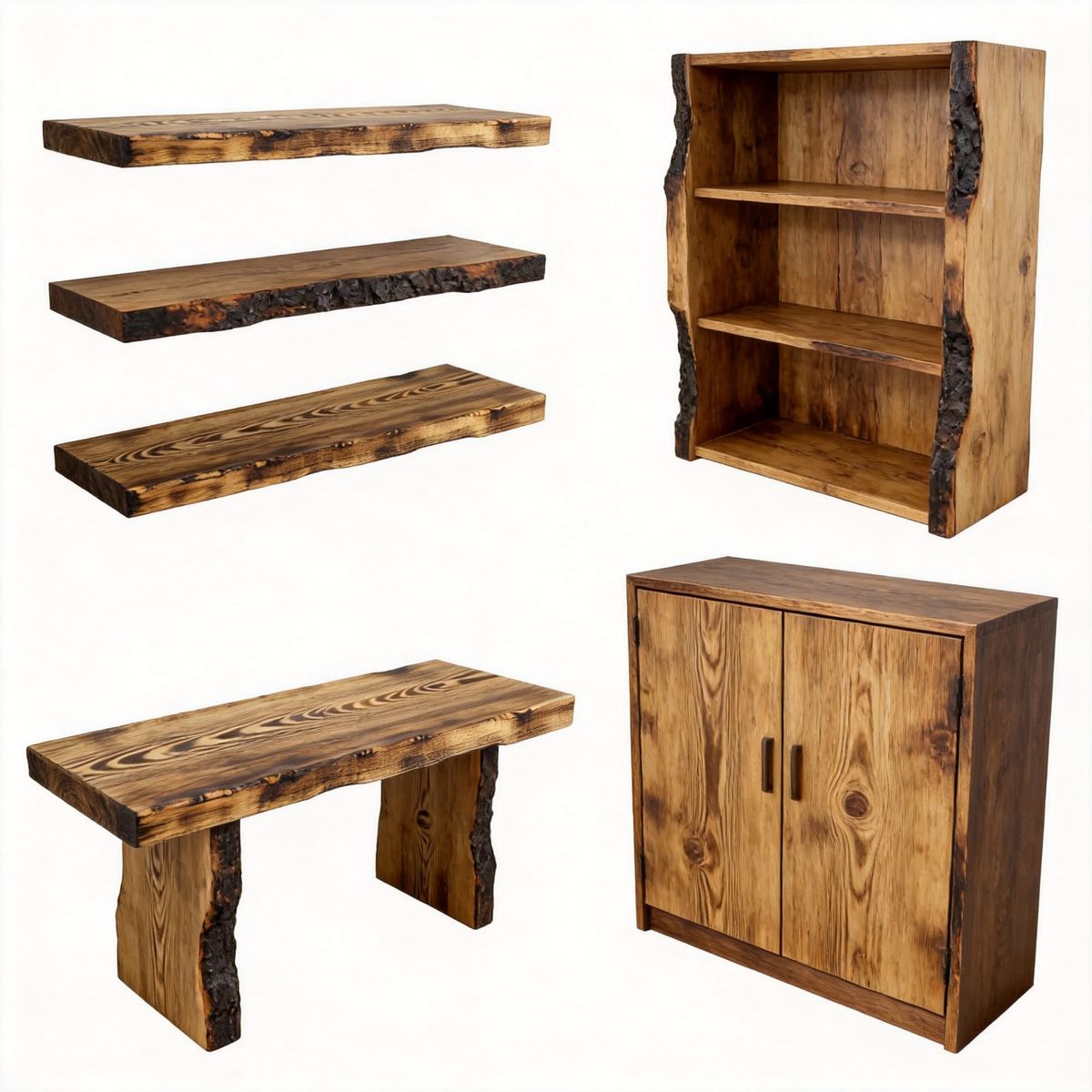
Reclaimed scaffold boards are one of the best materials for rustic shelves, chunky tables, garden beds, wooden planters, workshop storage and DIY furniture.
They are strong, full of character and perfect if you want that proper reclaimed timber look.
But here’s the honest truth.
A scaffold board project can look amazing — or it can become a headache — depending on the boards you choose, how you measure, how you finish them and how you build with them.
This guide covers the biggest scaffold board mistakes to avoid before building shelves, tables, raised beds or garden planters.
Need help choosing scaffold boards in Nottinghamshire?
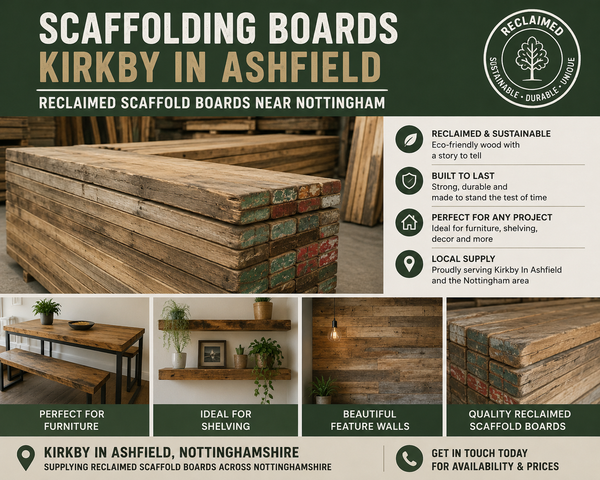
AA Trading Merchants supplies reclaimed scaffold boards, used scaffold boards and custom cut boards across Nottingham, Nottinghamshire, Ashfield, Kirkby-in-Ashfield and surrounding areas.
Message us on WhatsApp, visit our Facebook page, or browse AA Trading Merchants online to discuss board sizes, delivery, collection, sanding, cutting and project ideas.
Quick Answer: What Is the Biggest Mistake People Make With Scaffold Boards?
The biggest mistake is buying scaffold boards without thinking about the final project first.
A board that looks perfect for a rustic garden planter might be too rough for indoor shelves. A board that works well for a chunky garden bench might need more sanding for a dining table. A short offcut might be perfect for small shelves, but not suitable for a long unsupported span.
Before buying, think about:
| Question | Why it matters |
|---|---|
| What are you building? | Shelves, tables and raised beds need different board quality |
| Is it indoor or outdoor? | Indoor boards usually need more sanding and finishing |
| Do you need custom cuts? | Planning cuts first can save waste and money |
| Do you want rustic or smooth? | Reclaimed boards have marks, grain, dents and character |
| Will it hold weight? | Shelves and tables need the right fixings and support |
The best results usually come from choosing the right board for the job — not just buying the nearest or cheapest boards available.
Mistake 1: Choosing the Wrong Boards for the Project
Not every scaffold board should be used for every project.
That does not mean one board is “bad” and another is “good”. It means different boards suit different jobs.
For example, a weathered reclaimed scaffold board may look brilliant as a rustic garden shelf, planter or workshop rack. However, if you want a clean indoor coffee table, you may prefer a straighter board with fewer rough patches and a smoother finish.
Best board types by project
| Project | Best type of board |
|---|---|
| Rustic shelves | Character boards, sanded or lightly cleaned |
| Dining table | Straighter boards, better surface, more sanding |
| Garden raised beds | Strong boards, suitable outdoor finish |
| Wooden planters | Good condition boards, cut cleanly, treated or lined |
| Garage storage | Strong rustic boards, function over perfect appearance |
| Shop displays | Cleaner boards with strong visual character |
| Benches | Thicker, straighter boards with proper support |
If you are buying reclaimed scaffold boards in Nottinghamshire, it helps to choose from local stock where possible. That way, you can pick the look, colour, condition and finish that suits your project.
Mistake 2: Not Measuring Properly Before Buying
This is one of the easiest mistakes to avoid.
People often buy a few scaffold boards because they look useful, then work out the project afterwards. However, it is usually better to measure first.
Reclaimed scaffold boards are commonly around 225mm wide and 38mm thick, which makes them ideal for chunky shelves, rustic furniture and garden builds.
At AA Trading Merchants, common board lengths include:
| Length | Common uses |
|---|---|
| 1ft | Small shelves, signs, blocks, offcuts |
| 2ft | Mini shelves, small planters, display pieces |
| 3ft | Shelves, small benches, compact planters |
| 4ft | Shelving, raised bed sections, tables |
| 5ft | Benches, medium shelves, garden projects |
| 6ft | Shelves, bed sides, worktops |
| 8ft | Larger shelves, planters, tables, raised beds |
| 10ft | Long shelves, big planters, workshop storage |
| 13ft | Best value for cutting into multiple useful sizes |
Example: what one 8ft board can become
| Board length | Possible cuts |
|---|---|
| 8ft board | 2 x 4ft shelves |
| 8ft board | 1 x 5ft shelf + 1 x 3ft shelf |
| 8ft board | 4 x 2ft pieces |
| 8ft board | Short sides for a compact raised bed |
Example: what one 13ft board can become
| Board length | Possible cuts |
|---|---|
| 13ft board | 1 x 6ft + 1 x 4ft + 1 x 3ft |
| 13ft board | 2 x 5ft + 1 x 3ft |
| 13ft board | Multiple shelf lengths |
| 13ft board | Planter sides, offcuts and support pieces |
A little planning before buying can save money, reduce waste and make the project easier.
Mistake 3: Forgetting About Thickness and Weight
Scaffold boards are not like thin DIY shelf boards.
They are chunky, heavy and solid.
That is one of the reasons people love them. They feel proper. They look strong. They give that rustic, industrial timber style that thinner timber often cannot match.
However, that also means you need to think about:
- Wall fixings
- Brackets
- Table legs
- Support spacing
- Weight on plasterboard walls
- Transport and delivery
- Whether you need help moving longer boards
For shelves, especially, do not just think about the board. Think about what the board will hold.
Books, tools, kitchen items and ornaments all add weight. The wall, brackets and fixings need to match the job.
For heavy shelving, use suitable heavy-duty brackets and fix into solid masonry, timber studs or proper structural support where possible. If unsure, ask a competent tradesperson before fitting.
Mistake 4: Expecting Reclaimed Boards to Look Brand New
Reclaimed scaffold boards are loved because they look used, rustic and full of character.
That means they can include:
- Saw marks
- Weathering
- Stamps
- Dents
- Colour variation
- Small chips
- Nail marks
- Darker patches
- Grain movement
- General signs of previous use
For many people, that is the whole point.
A rustic scaffold board shelf looks better when it has character. A garden planter looks more natural when the timber has texture. A reclaimed table top can look more unique than flat, lifeless new timber.
However, if you want a very clean, modern, smooth look, make that clear before ordering.
There is a big difference between:
| Finish style | Best for |
|---|---|
| Natural reclaimed | Rustic shelves, garden projects, workshop storage |
| Lightly sanded rustic | Indoor shelves, wall displays, small furniture |
| Smooth sanded | Tables, desks, benches, indoor furniture |
| Dark stained | Industrial shelves, bars, man caves |
| Black painted | Modern garden planters, shop displays |
| Clear waxed | Indoor shelves, side tables, feature furniture |
| Oiled outdoor | Raised beds, planters, garden furniture |
The mistake is not choosing rustic boards. The mistake is expecting rustic boards to behave like perfect new furniture timber without sanding, prep or finishing.
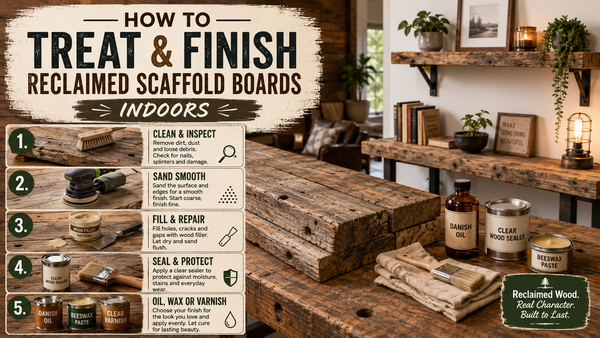
Mistake 5: Skipping Sanding on Indoor Projects
If you are making indoor scaffold board shelves, tables or benches, sanding matters.
A board can look great in a photo but still feel rough to the touch. Indoor furniture needs a different level of finish compared with outdoor planters or garage storage.
For indoor use, sanding helps:
- Remove rough edges
- Reduce splinters
- Smooth the surface
- Make wax, stain or oil apply better
- Improve the final look
- Make shelves easier to clean
Simple sanding guide
| Project | Suggested prep |
|---|---|
| Rustic wall shelf | Light sanding, edges softened |
| Kitchen shelf | Medium sanding, sealed finish |
| Coffee table | More sanding, smooth top surface |
| Dining table | Careful sanding, strong protective finish |
| Garden planter | Smooth sharp edges, outdoor treatment |
| Workshop storage | Basic sanding only if needed |
You do not always need to remove every mark. In fact, removing too much can take away the reclaimed character.
The best finish is usually a balance: smooth enough to use, rustic enough to look authentic.
Mistake 6: Using the Wrong Finish for the Location
A scaffold board used indoors does not need the same finish as a scaffold board used outside.
Indoor projects are usually about feel, appearance and protection from stains.
Outdoor projects are about moisture, weather and durability.
Indoor finish options
| Finish | Good for |
|---|---|
| Clear wax | Rustic shelves, indoor furniture |
| Danish oil | Tables, desks, benches |
| Wood stain | Colour change and protection |
| Matt varnish | More durable surface protection |
| Paint | Modern or bold furniture style |
Outdoor finish options
| Finish | Good for |
|---|---|
| Exterior wood oil | Garden furniture, planters |
| Outdoor stain | Raised beds, garden features |
| Exterior paint | Decorative planters, signs |
| Liner inside planter | Helps protect timber from wet soil |
| Raised feet/base | Helps stop timber sitting in water |
The biggest outdoor mistake is letting timber sit directly in wet soil or standing water for long periods.
For raised beds and planters, it can help to use a liner, allow drainage and treat the timber properly for the look and lifespan you want.
Mistake 7: Not Thinking About Drainage in Garden Beds and Planters
Scaffold boards can make excellent raised garden beds and wooden planters.
They are strong, chunky and have a much more premium feel than many thin garden centre planters.
But drainage matters.
If you are building a planter, think about:
- Where water will escape
- Whether the planter needs feet
- Whether the inside needs lining
- Whether the base should be open or closed
- Whether it will sit on soil, slabs, decking or gravel
- Whether the timber needs oil, stain or outdoor treatment
Common garden build mistakes
| Mistake | Why it causes problems |
|---|---|
| No drainage | Soil can stay too wet |
| Timber sat in standing water | Can shorten lifespan |
| No liner where needed | Wet soil stays against the timber |
| No plan for weight | Large beds become very heavy when full |
| Wrong size | Bed becomes awkward to fill, move or plant |
For vegetable beds, herb planters and decorative garden boxes, it is worth planning the size properly before ordering boards.
Mistake 8: Buying Without Checking Board Condition
Reclaimed scaffold boards vary.
That is normal.
Some boards are straighter. Some are rougher. Some have more character. Some are better for cutting. Some are better for rustic outdoor use.
Before buying, check or ask about:
- Splits
- Warping
- Rot
- Excessive damage
- Metal end bands
- Surface condition
- Dampness
- Suitability for sanding
- Suitability for indoor or outdoor use
Simple condition guide
| Board type | Best use |
|---|---|
| Rustic boards | Garden projects, shelves, storage, planters |
| Straighter boards | Tables, benches, long shelves |
| Rough boards | Outdoor builds, rustic projects, workshop use |
| Sanded boards | Indoor shelves, furniture, display pieces |
| Offcuts | Small shelves, signs, planters, creative projects |
This is why buying locally can be a big advantage. You can often choose boards that match your project instead of ordering blind and hoping they arrive how you imagined.
Mistake 9: Forgetting About Fixings, Brackets and Support
A scaffold board is only as good as the way it is fitted.
This is especially true for shelves and tables.
For scaffold board shelves, weak brackets can ruin the project. For tables, poor legs or bad support can cause movement. For benches, unsupported spans can feel unstable.
Fixing mistakes to avoid
| Project | Mistake to avoid |
|---|---|
| Shelves | Using light-duty brackets for heavy boards |
| Tables | Not supporting the boards underneath |
| Benches | Not bracing the legs properly |
| Raised beds | Not securing corners strongly |
| Planters | Not allowing for soil weight |
| Shop displays | Not checking stability before loading items |
If you are building something that holds weight, plan the support before you cut the boards.
Mistake 10: Not Planning the Look Before Cutting
Once a board is cut, the character changes.
A mark, stamp or weathered section might look brilliant as the front of a shelf. Another section might be better hidden underneath a table.
Before cutting, look at the board and decide:
- Which side is the best face?
- Which edge should face forward?
- Are there stamps or marks you want to show?
- Are there rougher sections you want to cut away?
- Which pieces need to match visually?
- Will the grain direction matter?
This is especially important for:
- Floating shelves
- Matching shelf sets
- Table tops
- Benches
- Shop displays
- Feature walls
- Garden planters with front-facing boards
A good reclaimed board project is not just about cutting wood. It is about using the character in the right place.
Project-Specific Mistakes to Avoid
Scaffold Board Shelves
Scaffold board shelves are one of the most popular uses for reclaimed boards.
They work well in:
- Kitchens
- Alcoves
- Living rooms
- Utility rooms
- Garages
- Workshops
- Shops
- Bars
- Garden rooms
The main mistake is underestimating the weight.
Because scaffold boards are thick and solid, they need proper support. For long shelves, use enough brackets and suitable wall fixings.
For indoor shelves, also think about sanding and sealing. A raw rustic board might look great, but a waxed or lightly sanded board is usually nicer to live with.
Scaffold Board Tables
Scaffold board tables can look amazing, especially if you like rustic, industrial or farmhouse style furniture.
But tables need more prep than basic shelves.
Avoid these mistakes:
- Using boards that are too uneven for the top
- Not sanding the surface properly
- Not fixing boards together securely
- Not supporting the underside
- Not using a protective finish
- Not checking height and leg position before building
For dining tables and desks, the top needs to feel practical, not just look good.
A table can still have reclaimed character, but the surface should be comfortable enough to use.
Scaffold Board Garden Beds
Scaffold boards are a popular choice for raised garden beds because they are chunky, strong and give a rustic garden look.
The main mistakes are:
- Making the bed too wide to reach across
- Not thinking about drainage
- Letting boards sit in standing water
- Not planning soil weight
- Not using strong corner fixings
- Forgetting access around the bed
A raised bed should be practical as well as good-looking.
For many gardens, simple rectangular beds work best. For smaller spaces, narrow beds, corner planters or long slim boxes can be better.
Scaffold Board Planters
Planters are slightly different to raised beds because they are often more decorative.
They may sit near a front door, patio, shop front, beer garden or driveway.
Common planter mistakes include:
- No drainage holes
- No internal liner
- Too little support for heavy soil
- Poor corner strength
- Using boards that are too rough for a decorative area
- Not choosing a finish that matches the garden
If you want a more premium finish, consider sanding, staining, painting or adding a personalised sign.
AA Trading Merchants can also help with custom wooden planter ideas and made-to-order garden builds depending on your size, style and location.
What to Send Us for a Quote
To get a quicker and more accurate quote, send a simple message with the details below.
Quote details to send:What you are building: shelves, table, raised bed, planter, bench, storage, display etc.Board lengths needed: 1ft, 2ft, 3ft, 4ft, 5ft, 6ft, 8ft, 10ft, 13ft or custom cuts.Quantity of boards.Finish needed: rough, rustic, lightly sanded, sanded, cut-to-size, stained or painted.Delivery or collection.Your postcode if delivery is needed.Any photos, sketches or measurements if you already have a project in mind.
You can message AA Trading Merchants on WhatsApp, visit our Facebook page, or browse AA Trading Merchants online.
Delivery may be available across Nottinghamshire, Nottingham and surrounding areas depending on order size and location.
Quick Buyer Checklist Before You Start
Before buying scaffold boards for shelves, tables or garden beds, run through this checklist.
| Check | Why it matters |
|---|---|
| Have you measured the space? | Prevents buying the wrong length |
| Do you know the final use? | Helps choose the right board condition |
| Do you need custom cuts? | Saves time and waste |
| Is it indoor or outdoor? | Affects sanding and finish |
| Do you need delivery? | Longer boards can be hard to transport |
| Have you planned fixings? | Shelves, tables and beds need support |
| Do you want rustic or smooth? | Sets the right expectation |
| Have you allowed for waste/offcuts? | Useful for small shelves or signs |
This is the kind of planning that makes the difference between a project that feels thrown together and one that looks properly finished.
Why Buying From a Local Nottinghamshire Supplier Helps
Buying reclaimed scaffold boards locally gives you more control.
Instead of guessing from a random online listing, you can ask questions, choose boards, discuss cuts and explain what you are building.
That matters because reclaimed timber is not all identical.
At AA Trading Merchants, customers often use boards for:
- Rustic shelves
- Raised garden beds
- Wooden planters
- Coffee tables
- Benches
- Garden furniture
- Garage storage
- Workshop racks
- Shop displays
- Bars and garden rooms
- DIY home projects
- Custom timber builds
Being able to speak to someone before buying makes it easier to choose boards that actually suit the job.
Mini Quote Template You Can Copy and Send
Copy and paste this into WhatsApp or Facebook:
Hi AA Trading Merchants, I’m looking for reclaimed scaffold boards.
Project:
Board lengths needed:
Quantity:
Finish: rough / rustic / sanded / cut-to-size / other
Delivery or collection:
Postcode if delivery:
Any extra details:
Could you give me a price please?
Send it through WhatsApp, message the AA Trading Merchants Facebook page, or visit AA Trading Merchants online.
FAQs About Scaffold Board Projects
Can I use reclaimed scaffold boards for shelves?
Yes, reclaimed scaffold boards are very popular for rustic shelves. They are thick, strong and full of character. The key is using suitable brackets and fixings, especially if the shelf will hold heavy items.
Are scaffold boards good for tables?
Yes, scaffold boards can make excellent rustic tables, desks, coffee tables and worktops. However, table projects usually need better sanding, stronger fixing underneath and a protective finish.
Can scaffold boards be used for raised beds?
Yes, scaffold boards are commonly used for raised garden beds because they are chunky and practical. For best results, think about drainage, corner strength, soil weight and whether you want to line or treat the timber.
Do scaffold boards need sanding?
For indoor projects, usually yes. For outdoor projects, it depends on the look you want. A light sand can remove rough edges while keeping the rustic character.
What is the usual size of a scaffold board?
Many scaffold boards are around 225mm wide and 38mm thick. Lengths vary, with common project sizes including 1ft, 2ft, 3ft, 4ft, 5ft, 6ft, 8ft, 10ft and 13ft.
Can scaffold boards be cut to size?
Yes, scaffold boards can be cut to size. Custom cutting is useful for shelves, raised beds, planters, benches and smaller DIY projects.
Are reclaimed scaffold boards smooth?
Not always. Reclaimed boards can be rough, weathered or marked from previous use. They can often be sanded or finished depending on the project.
Are scaffold boards good for garden planters?
Yes, they can be ideal for chunky wooden planters. Just make sure you plan drainage, lining, finish and support because soil becomes heavy when wet.
Should I choose new or reclaimed scaffold boards?
Choose reclaimed boards if you want rustic character, weathered texture and a more unique finish. Choose newer boards if you want a cleaner and more uniform look.
Where can I buy scaffold boards in Nottinghamshire?
AA Trading Merchants supplies reclaimed scaffold boards, used scaffold boards and custom cut boards in Nottingham, Nottinghamshire, Ashfield, Kirkby-in-Ashfield and surrounding areas.
Final Verdict: Plan First, Then Buy the Right Scaffold Boards
Scaffold boards are brilliant for shelves, tables, raised beds, planters and rustic furniture.
But the best projects start with a plan.
Before buying, think about the board length, condition, finish, fixings, sanding, outdoor protection and how the timber will actually be used.
If you get those details right, reclaimed scaffold boards can give you a strong, practical and unique finish that standard timber often cannot match.
Looking for reclaimed scaffold boards in Nottinghamshire?
AA Trading Merchants can help with board sizes, custom cuts, sanding options, project advice, collection and delivery across Nottinghamshire and surrounding areas depending on order and location.
Message us on WhatsApp, visit our Facebook page, or browse AA Trading Merchants online to discuss your project.